Managing Changes in Source Water Quality with Mobile Water Treatment
Your source water quality can change overnight. Learn how mobile water treatment systems provide the flexibility to adapt.
Note: This post is a general introduction written by our marketing team and reviewed for technical accuracy by our engineers. For in-depth analysis of a specific technology or application, please contact our engineering team.
When the environment changes, water changes along with it. To a casual observer, water from a lake or aquifer looks roughly the same day after day, but the people responsible for treating that water know that it shifts constantly based on the environment.
Operators have always had to adjust for events like spring runoff or seasonal turnover. The challenge today is that these changes are becoming more frequent, more intense, and less predictable. When the water chemistry spikes unexpectedly, it can stretch a traditional, site-built treatment system past what it was designed to handle.
Here, we'll look at what causes these fluctuations and how mobile water treatment systems give you the flexibility to handle them.
Why Source Water Quality Changes
Water treatment would be straightforward if the water quality never changed. But in the real world, the water in lakes, rivers, and wells is always moving and reacting. Some of these shifts happen like clockwork with the seasons, while others arrive without warning.
Seasonal Cycles
Seasonal shifts are predictable, yet they can still cause water quality challenges.
For many surface water sources, spring is the most difficult season. Melting snow and heavy rains act like a scrub brush across the landscape, washing soil, debris, and pollutants into the water. This causes a spike in turbidity. The increase can force operators to use more treated water for backwashing and to clean their filters more frequently.
Lakes also go through a natural process called turnover in the spring and fall. As water temperature changes, the lake's layers mix. This stirs up organic matter from the bottom of the lake, which can release manganese or compounds that cause musty tastes and odours. It can also trigger harmful algal blooms (HABs) that release toxins into the water supply.
Anticipating these natural cycles allows operators to deploy the right tools to handle the load without overwhelming their primary systems.
Groundwater Contaminants
Groundwater is not immune to surface conditions, as contaminants frequently migrate into deep aquifers.
Groundwater is often seen as more stable than surface water because it is tucked away underground. However, in many regions (particularly rural areas with heavy agricultural activity), aquifers can be heavily influenced by surface conditions.
Heavy rainfall or rapid snowmelt can mobilize surface contaminants, driving nitrates from fertilizers and manure, as well as effluents from septic systems, down into the groundwater supply. These spikes can happen suddenly, pushing nitrate levels above compliance limits and forcing operators to scramble for a solution.
When surface runoff infiltrates the aquifer, a "safe" well can become non-compliant in a matter of hours.
Mining Operations
For mining sites, water quality is a moving target that changes with every phase of the project’s lifecycle.
In this context, "source water" usually refers not to drinking water but rather to process water, wastewater, or tailings ponds that require treatment. The variability of this water is often directly tied to the site's lifecycle. Water quality and volumes will change significantly over the lifespan of a mine. Fortunately, many of these shifts are predictable and can be planned for.
During construction and early closure, extensive earth-moving activities often result in higher turbidity and suspended solids in runoff. As the site moves into active operations, activities like blasting increase nitrogen species, such as ammonia, nitrate, and nitrite, which eventually convert to nitrate before depleting during closure. Over the long term, the concentration of metals and metalloids can increase through oxidation processes.
The source and location of the water also shift throughout the life of a mine. Operators must manage different "contact waters" from dewatering, milling, and metallurgical processes. A static plant designed solely for the start-up phase may be ill-equipped to handle the complex chemistry of full-scale operations or closure, requiring a treatment plan that evolves alongside the site.
Successful water management requires a plan that adapts as the operation matures.
Impact of Wildfires
Wildfires can fundamentally alter the chemistry of a watershed for years.
The most challenging changes are the ones that happen without warning. Wildfires, for example, change the watershed and introduce complex contaminants.
Almost 90% of Canadian drinking water plants are supplied by lakes, reservoirs, and rivers, many of which are in forested areas. These source waters can be directly contaminated during a fire by deposited ash, fire retardants, or overland runoff carrying contaminants and sediment from burnt areas. The fire also changes how water moves through the catchment; the loss of groundcover and the creation of water-repellent burnt ground accelerate the flow of sediments, debris, and pollutants into the supply.
Following a wildfire, this contaminated source water becomes significantly harder to treat. Operators must deal with increased levels of sediments, nutrients, ions, metals, and natural organic matter (NOM) arising from burnt material.
The impact extends to the physical infrastructure itself. Fire damage can cause power outages that interrupt water treatment and pumping or disrupt access routes for personnel and chemical deliveries. In severe cases, heat can damage treatment plants, pump houses, and storage tanks, leading to supply loss or contamination. Smoke and debris can infiltrate reservoirs through vents and destroyed well caps can allow contaminants to enter groundwater wells.
Finally, water lines themselves may be contaminated with volatile and semi-volatile organic compounds (VOCs/SVOCs) such as benzene, methylene chloride, toluene, and xylene. This is especially common following interface fires, where fires can involve buildings and forest fuel simultaneously.
These problems don't go away once the smoke clears. Contaminant levels can remain above pre-fire conditions for months or years and often spike again during spring runoff or heavy rainfall.
Since these effects persist long after the fire is out, water treatment systems must remain resilient to complex, fluctuating contaminants for years.
Why Water Variability is Increasing
While source water has always been variable, climate change is acting as an accelerant. Most regions of Canada will experience increased rainfall, leading to greater pollutant runoff and sedimentation that can overwhelm stormwater management systems.
Rising air temperatures are also warming water bodies, which increases the risk of Harmful Algal Blooms.
The changing climate means that historical data is becoming a less reliable predictor of future conditions. Engineers and operators who rely solely on past water quality trends can find themselves unprepared for modern weather patterns. To keep water safe today, infrastructure needs to be able to pivot as quickly as the environment does.
How Mobile Treatment Manages Quality Changes
Source water quality volatility is likely the new normal. Whether it is driven by climate instability, seasonal cycles, or industrial changes, managing these changes requires agility.
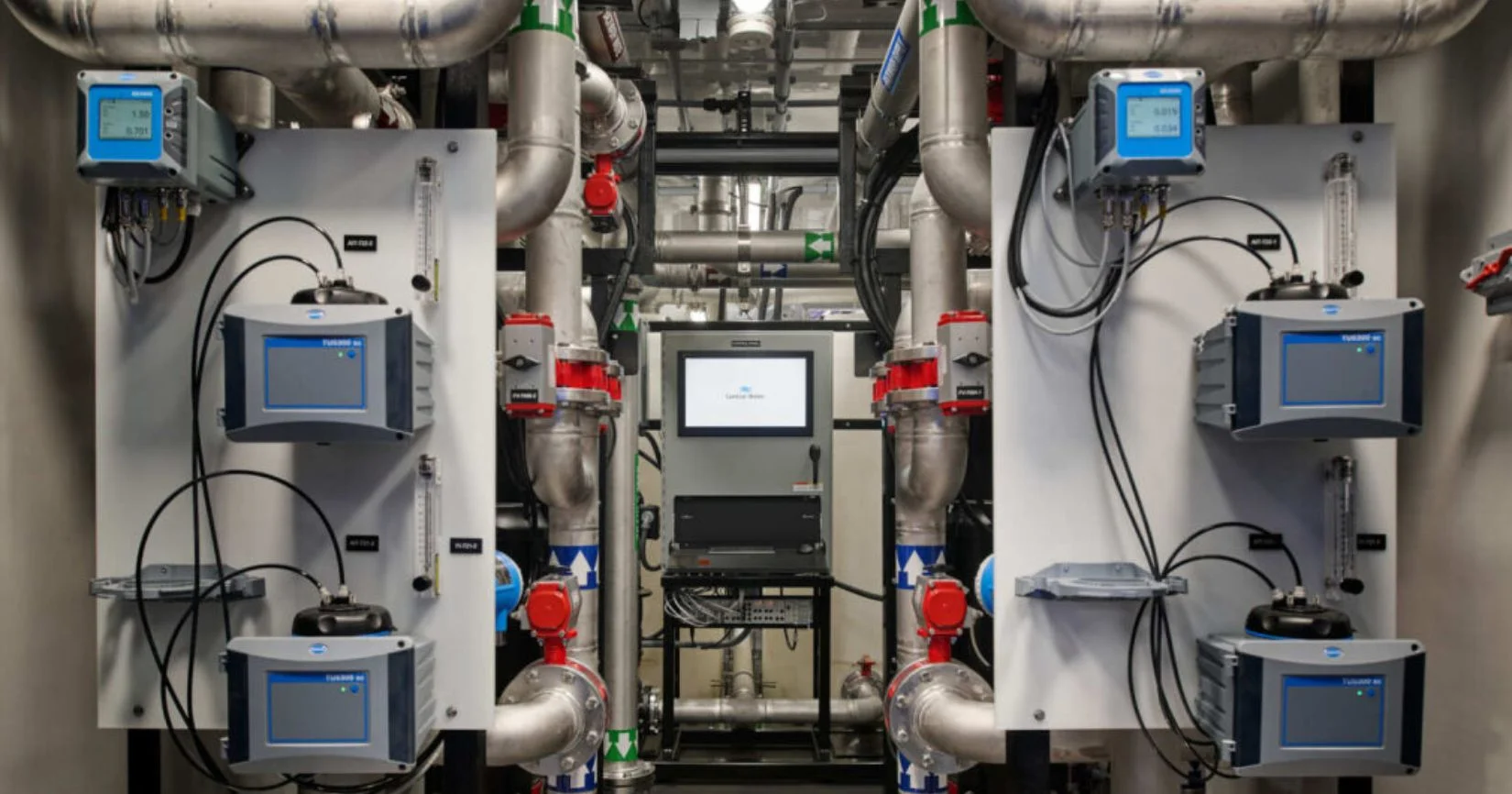
The key advantage of mobile water treatment isn't just that it can move, but that it can be configured to solve the specific problem at hand. At Laminar Water, we don't rely on a single technology to solve every issue. Instead, we connect a series of leading water treatment technologies in a treatment train to target the exact mix of contaminants in your water.
Ultrafiltration (UF): This technology uses membranes with microscopic pores that act as an absolute barrier to suspended solids and pathogens like Giardia and Cryptosporidium. Unlike sand filters, which can let particles pass through if they get overloaded during a spring melt, a UF membrane physically blocks them. It is highly effective for handling the massive spikes in turbidity that come with seasonal runoff.
Nanofiltration (NF) & Reverse Osmosis (RO): When the problem involves dissolved chemicals rather than floating particles, we use high-pressure membranes. Nanofiltration is excellent for removing organic matter that causes colour and odour changes and prevents the formation of harmful by-products during disinfection. Reverse Osmosis (RO) removes up to 99% of dissolved salts, nitrates, and even emerging contaminants like PFAS.
Greensand Filtration: This is the standard solution for iron and manganese. It is critical during lake turnover events when manganese levels spike, causing water to stain laundry and fixtures. It also protects downstream equipment from getting clogged with metal deposits.
Granular Activated Carbon (GAC): When algal blooms cause that distinctive "musty" taste and odour in the summer, GAC is the most effective way to remove it. It is also a leading technology for removing "forever chemicals" (PFAS) and pesticides from agricultural runoff.
Because water chemistry varies so much, we never guess. Every project starts with a technical analysis of your water source. This allows us to select the right combination of technologies before the system is even built.
And because we build in a factory while your site is being prepared, we can deliver a solution in months or weeks, giving you a rapid response to changing source water conditions.
The Laminar Water Advantage
Mobile water treatment is our entire business. Laminar Water was founded and is led by Professional Engineers with over 50 years of combined experience. Our team has spent decades on the ground commissioning, programming, and troubleshooting water treatment systems; we know what fails under pressure, and we build our units to stand up to constant demand.
Built in Canada, Not on an Assembly Line. Every system is engineered and assembled at our facility in Cambridge, Ontario. We don't use a detached assembly line; instead, the Professional Engineers who designed your system personally supervise its construction. This ensures that the quality of your infrastructure is never left to chance.
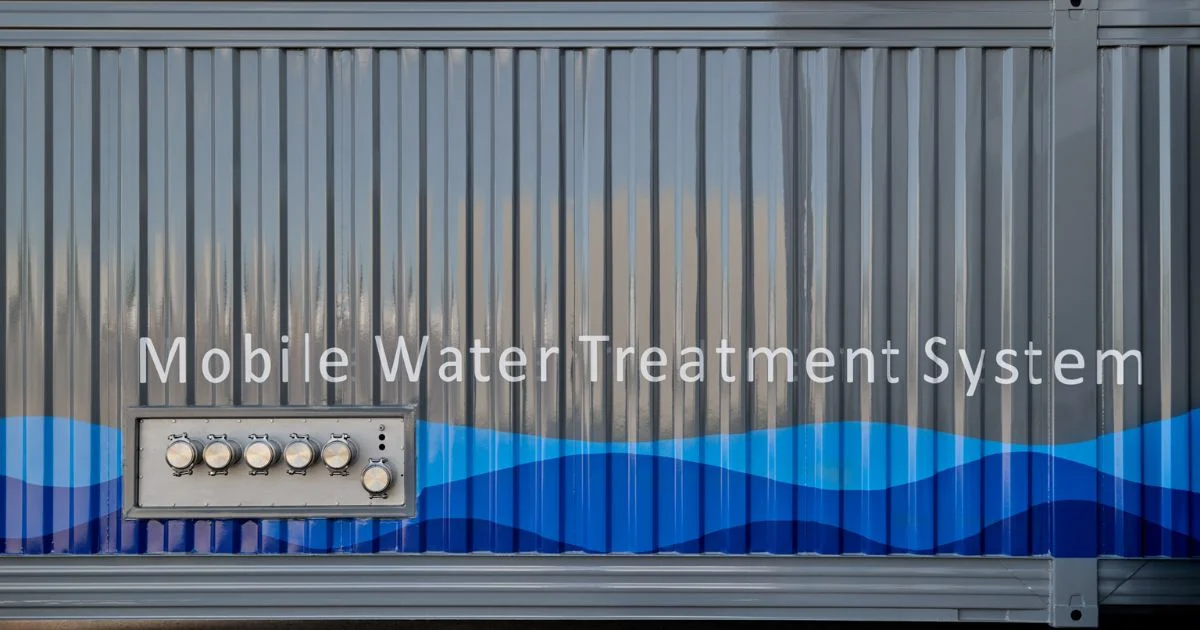
Extreme Resilience. We house our systems in 53-foot intermodal shipping containers made of Corten weathering steel. These are not standard boxes; they are high-strength enclosures designed to resist corrosion and withstand hurricane-force winds. To protect the technology inside, we install redundant HVAC systems, including two dedicated units and supplemental heating, so the system maintains a stable temperature through any season, in any North American climate.
Direct Access to Experts. Service is a part of the build. When you have a question or need support, you don't speak to a call centre or navigate support tiers. You get a direct line to the engineers who designed and built your system.
Preparing for future changes in source water doesn't have to mean overbuilding permanent infrastructure. If you are concerned about how your current infrastructure will handle future changes in your source water, we can help.
Contact the engineering team at Laminar Water for a free, no-obligation problem assessment. We will help you analyze your specific water challenges and define the configuration you need to keep your water safe and compliant.