Understanding Media Filtration for Your Water Treatment Plant

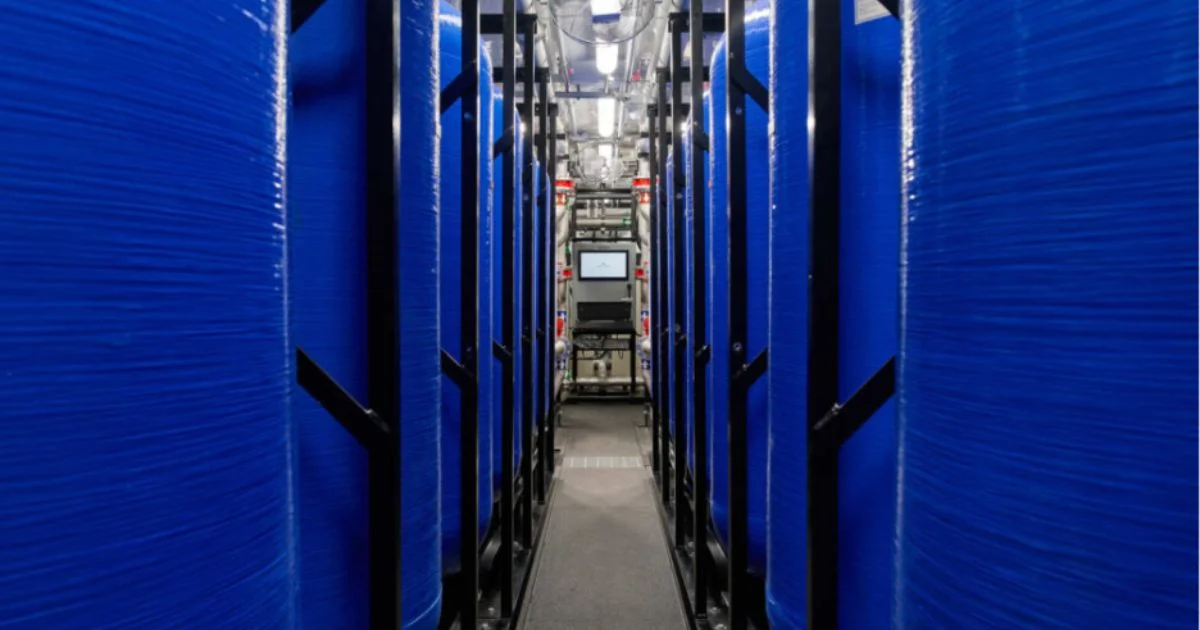
Media Filtration is a broad category that includes Multimedia Filtration (MMF), Greensand Filtration (GSF), and Granular Activated Carbon (GAC). Learn how each of these technologies works and the challenges they can solve.
Note: This post is a general introduction written by our marketing team and reviewed for technical accuracy by our engineers. For in-depth analysis of a specific technology or application, please contact our engineering team.
"Media filtration" isn’t a single process, but a whole category of water treatment technologies. The choice of media inside the filter vessel determines how the water is purified and which specific contaminants are targeted.
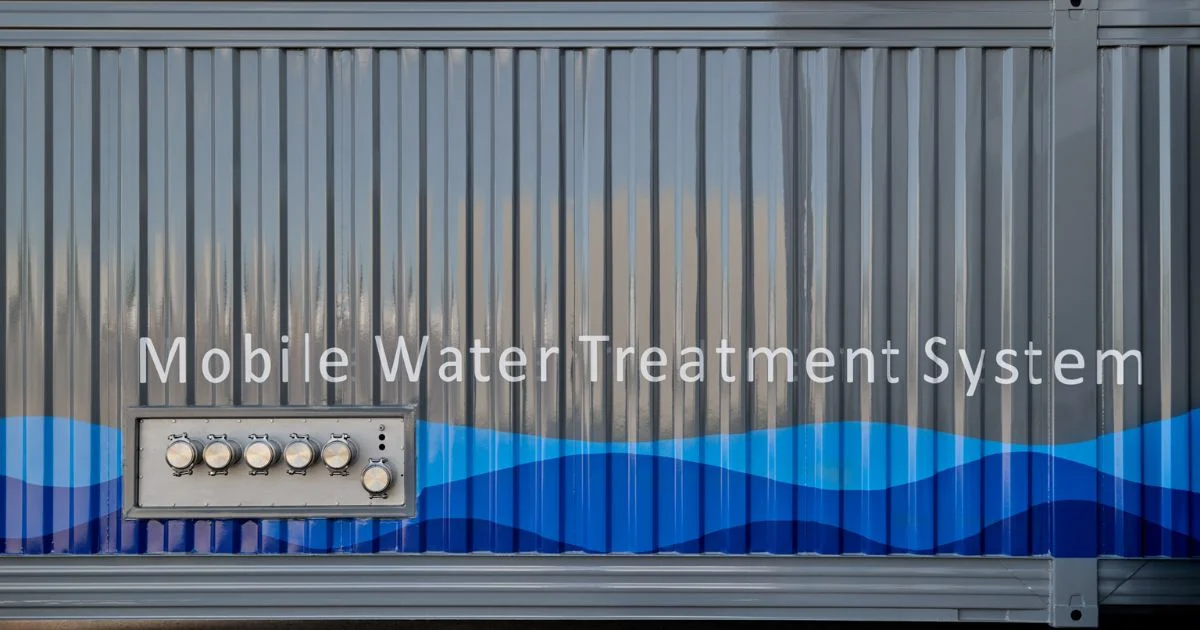
Choosing the correct treatment mechanism is the first step in solving a water quality problem, whether it's for a small community trying to meet regulatory compliance or an industrial facility that needs reliable pre-treatment. Laminar Water's containerized, mobile systems include a pre-engineered and appropriately specified media filtration system that can be rapidly delivered directly to your site.
To show how this works in practice, this post takes you through the three main media types our systems use, and the mechanisms behind them: Multimedia Filtration (MMF), Greensand Filtration (GSF), and Granular Activated Carbon (GAC).
Multimedia Filtration (MMF)
Multimedia Filtration (MMF) is the most popular form of media filtration. In fact, when people refer to “media filtration”, they’re usually talking about MMF. Multimedia Filtration is a purely physical process for removing suspended, non-dissolved solids from water. If you’re dealing with turbidity or cloudy water, this is the technology to use.
MMF uses a reverse-graded, dual-media bed with media of different sizes and densities. Typically, a top layer of larger, less dense anthracite coal sits above a layer of smaller, denser sand. Below both is a support layer of gravel, which keeps the finer media from escaping the vessel.
During the service cycle, water flows down through the media. The top anthracite layer catches the biggest particles while providing adsorption of organics, and smaller particles are removed as the water moves deeper into the sand. This design works well because it uses the entire depth of the filter bed to store solids, not just the top surface.
While it's easy to picture this as simple mechanical sieving, the removal process involves a combination of mechanisms:
Straining: Particles physically larger than the pore spaces between media grains are blocked.
Interception and Impingement: Smaller particles that follow the water's path can adhere to the surface of a media grain (interception) or, due to their inertia, collide with and stick to it (impingement).
Sedimentation: In small zones of very low water velocity within the filter bed, fine, dense particles can settle out of the flow under the influence of gravity.
Common Applications of Multimedia Filtration
MMF is used in both municipal and industrial water treatment, especially for:
Surface Water Treatment: MMF is commonly used, sometimes in combination with other technologies, for drinking water treatment when the source of water is from rivers or lakes. MMF is used for removal of suspended solids and turbidity as well as pathogenic microorganisms.
Pre-treatment for Reverse Osmosis (RO): MMF is a necessary pre-treatment step for membrane technologies like Reverse Osmosis. In this role, the MMF unit removes suspended solids that would otherwise quickly foul the delicate and expensive RO membranes.
Lagoon Effluent Polishing: For wastewater that has gone through primary treatment in an activated sludge system or a lagoon, MMF can be used as a final "polishing" step. It removes leftover suspended solids, algae, and other fine particles so the water can meet discharge regulations or be reused.
Mechanical filtration can only remove what is already a solid particle. To deal with contaminants that are dissolved in the water, a different approach involving either chemical addition or Reverse Osmosis is needed.
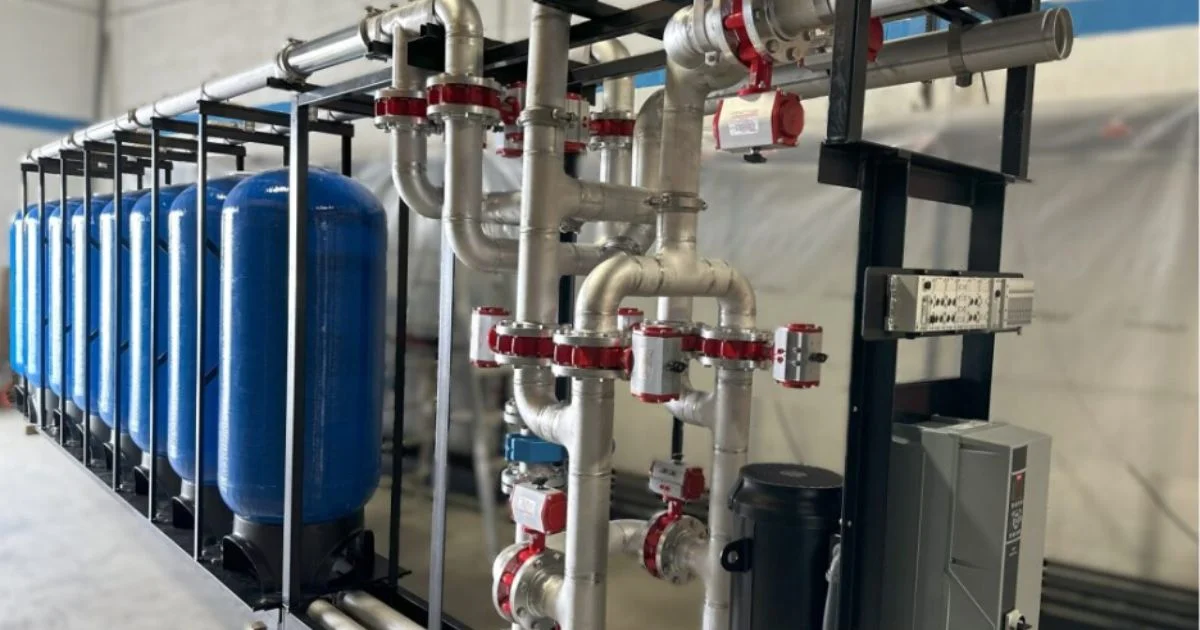
Greensand Filtration (GSF)
Greensand Filtration (GSF) targets dissolved iron and manganese using a process called catalytic oxidation. This technology is often used for treating well water, where a lack of oxygen allows minerals like iron and manganese to stay in a soluble state.
The media itself, "manganese greensand," is a silica sand coated with manganese dioxide (MnO₂), which acts as a catalyst. Despite the name, greensand is black, not green.
The process is almost exactly the same as media filtration. There’s a layer of anthracite at the top, followed by a layer of greensand, with gravel at the bottom to hold everything in. The difference is that, before the water enters the filter, an oxidant like sodium hypochlorite is continuously injected into the water. The oxidant and the catalyst work together to turn dissolved contaminants into solid, filterable particles:
Soluble ferrous iron (Fe²⁺) is oxidized to its insoluble ferric form (Fe³⁺), which precipitates as ferric oxide (Fe(O)₃)—a reddish-brown solid
Soluble manganese (Mn²⁺) is oxidized to insoluble manganese dioxide (MnO₂)—a black solid.
Once these solids form, they are immediately captured by the media bed.
Common Applications of Greensand Filtration
Groundwater Treatment for Compliance and Aesthetics: Manganese and iron cause aesthetic issues like discoloured water (red or black), metallic taste, and staining on fixtures and laundry. They are regulated in the Canadian Drinking Water Guidelines. GSF is a common choice for municipal and community water systems to remove manganese and iron.
Protecting Reverse Osmosis (RO) Membranes: If there's iron and manganese in well water, an MMF filter won't remove them. For this reason, GSF is an ideal pre-treatment for Reverse Osmosis.
Granular Activated Carbon (GAC)
Granular Activated Carbon (GAC) is an adsorption technology, not a filtration technology. Its job isn't to physically strain out particles, but to remove dissolved chemical contaminants using a surface adsorption mechanism.
The effectiveness of GAC comes from its large internal surface area. One pound of carbon has more than 35 acres of surface area, or the equivalent of almost 100 football fields. This surface is mostly non-polar, which gives it a strong affinity for other non-polar molecules, like dissolved organic compounds. As contaminated water flows through the GAC bed, weak intermolecular forces attract these organic contaminant molecules, causing them to stick to the carbon's surface and leave the water.
Unlike media like sand or greensand that can be backwashed and reused for years, GAC is a consumable and needs to be replaced. The GAC surface has a limited number of active sites where contaminants can adsorb. Once these sites are full, the carbon is considered "spent." The point where the GAC becomes saturated and the target contaminant starts getting through is called "breakthrough."
When a breakthrough happens, the spent GAC is removed from the vessel and replaced with fresh carbon.
Common Applications of Granular Activated Carbon
GAC is often used to remove taste and odour-causing compounds as well as a wide range of synthetic organic chemicals that are a growing public health and regulatory concern. One growing application today is removing Per- and Polyfluoroalkyl Substances, also known as PFAS or "forever chemicals." The chemical structure of PFAS makes them highly stable, non-polar, and resistant to oxidation, which are the same properties that make them well-suited for GAC adsorption.
The Media Filtration Operational Cycle
So far, we've covered the ‘what’ of media filtration: three of the main types of media and the contaminants they target. But the ‘how’ is just as important for long-term performance.
For granular media systems like MMF and greensand to work correctly, they rely on a standard operational cycle that includes a backwash, which is typically done about once a day. This process consists of three phases:
1. Service Cycle
This is the main operational mode where water treatment happens. Water enters the top of the pressure vessel, flows down through the media bed where contaminants are removed, and treated water leaves from the bottom.
2. Backwash Cycle
Over time, the media bed becomes clogged with the contaminants it has removed. The backwash cycle is a critical cleaning phase that restores the filter's capacity.
Trigger: The cycle is often triggered once a day, or when the pressure drop from the top to the bottom of the filter becomes excessive.
Bed Fluidization & Scouring: To start the backwash, the flow is reversed. This is done to "fluidize the bed," which means you expand the bed by about 40%. When this happens, all of the sand particles are pushed up in the water, causing them to scour against each other and remove the accumulated particulates.
Waste Removal: This process usually lasts for 5 to 10 minutes, though it can sometimes be up to 15 minutes. The best way to know how long to run it is by observing the backwash water. The backwash should continue until the backwash water looks clean.
3. Ripening (Rinse-to-Drain) Cycle
When the backwash is finished, the process is stopped. Because of the way the sand is reverse-graded, it settles with the appropriate stratification. But it's not ready yet. You have to rinse it.
The flow is returned to the normal downward direction, but the effluent is diverted to a drain for one to two minutes. This allows the media bed to compact and re-stratify. This process, known as "ripening the filter," ensures the filter achieves maximum removal efficiency before it is returned to service.
Now that we've covered the different technologies and how they operate, let's bring it all together.
Deploying Media Filtration for Your Water Treatment Plant
Choosing the right media filtration platform, be it MMF, GSF, GAC, or a combination of these, is a technical decision that directly impacts your entire operation. For many projects, however, the months or years it takes to design and commission a traditional brick-and-mortar water treatment plant is not an option.
Laminar Water addresses this problem with rapidly deployable, containerized water treatment systems. We pre-engineer and integrate the correct technology for your specific challenge into a mobile unit, which is useful for emergency or temporary needs where there is no time to build a permanent facility.
For consulting engineers, municipalities, and industrial operators facing urgent water needs, a faster solution is available. Schedule a consultation to discuss your specific water challenges and learn how our containerized media filtration systems can provide a reliable solution, faster.