Why We Don’t Outsource Our Manufacturing

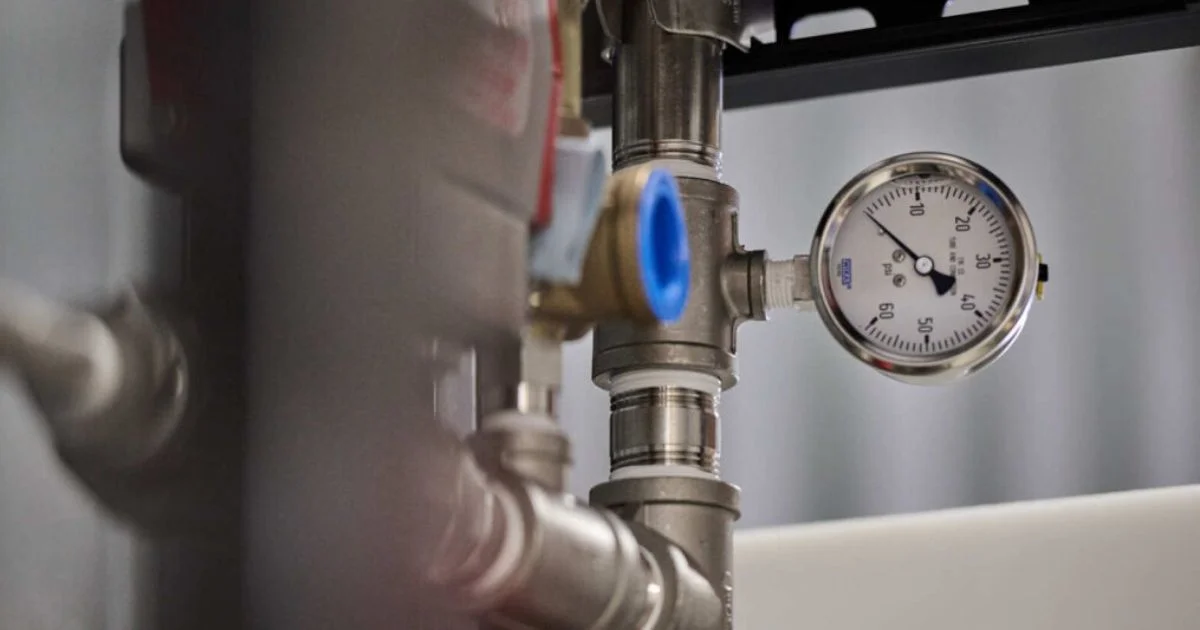
Note: This post is a general introduction written by our marketing team and reviewed for technical accuracy by our engineers. For in-depth analysis of a specific technology or application, please contact our engineering team.
When you're deploying a mobile water treatment system to a remote mining site in February or providing emergency drinking water during a municipal infrastructure failure, you can't afford the gaps that outsourcing creates.
Every modular water treatment system we build is designed, fabricated, and assembled entirely in Cambridge, Ontario—never outsourced. Keeping everything in-house ensures the direct connection between design and fabrication, so your system works exactly when you need it.
This approach doesn't just improve how your system is built, but also how it shapes our support long after delivery. Because our engineering and manufacturing teams remain connected throughout the lifecycle of your system, the people who answer your support calls are the same ones who saw your project through from the first drawing to final testing.
That continuity means faster answers, deeper insight, and support that's rooted in direct experience, not a handoff to a call centre or a generic troubleshooting script. For clients operating in remote locations or under regulatory pressure, that connection has practical consequences.
System configurations vary significantly from one project to the next, and the ability to reach the engineer who made specific design decisions — on membrane selection, chemical dosing, control logic — is a material advantage when performance questions arise in the field.
Outsourcing Breaks the Design-to-Field Chain
Most water treatment companies separate design from building. Engineers at the head office create specs, a third-party builder works from those specs, and field techs who've never met the design team commission it.
That model works fine for standardized equipment. A pressure vessel is a pressure vessel. Specs are clear, tolerances are set, and the building is straightforward.
Mobile water treatment systems require careful design attention throughout the execution of a project. A containerized RO system treating high-TDS groundwater in Saskatchewan faces different problems than an ultrafiltration unit polishing surface water in northern BC. Source water chemistry, operating conditions, Health Canada water quality standards, and site limits all affect how these systems are configured.
When fabrication is outsourced, the engineer who selected a particular membrane setup isn't watching the installation. The person who calculated media expansion isn't checking backwash water turbidity. The team that designed the control sequence isn't available when questions arise during testing.
Those gaps can create problems. Sometimes they're minor: a few extra hours to work around poor cable routing. Other times, major equipment that meets specs on paper creates maintenance headaches because no one thought about how an operator accesses parts for service.
You Can't Test What You Didn't Build
Factory testing before shipment sounds standard, but there's testing, and then there's actual operation with water.
When a third-party builder tests a system, they're checking that parts power on and valves actuate. The system ships when it passes those basic checks, regardless of whether it's been run under conditions that reflect actual field operation.
When the team that designed your system also builds it, factory testing means running it with water in circulation at the flowrates and pressures the equipment will see in the field. Control sequences are verified against the full range of operating scenarios.
Membrane recovery rates are confirmed against design calculations. Backwash cycles are run until filter media performance meets spec. If something doesn't perform as expected the engineers who designed the system are present to identify the cause and make adjustments before the unit leaves the facility.
By the time a system leaves our facility, it's already been running. Not theoretically working — actually operating. The operators getting training aren't learning on an untested system.
We've caught issues during factory testing that would have caused real problems in the field. A membrane recovery rate that looked fine in calculations, but created excess concentrate volume that the site couldn't handle. A control sequence that worked perfectly in normal conditions but didn't account for rapid temperature swings at remote northern sites.
These aren't failures. They're the kind of refinements that come from thorough testing and having the design team available to make adjustments immediately. Factory testing before deployment is one thing. Long-term pilot testing for validating full-scale plant designs is another, but both rely on the same principle: test with real water under actual conditions before committing to permanent infrastructure.
Critical Uses Can't Wait for Support Escalation
A containerized RO plant treating tailings pond water at a remote mining site can't wait three days for a support ticket to move through several departments. When your operation depends on that treatment capacity, you need answers from someone who knows your specific system setup.
Same for a mobile ultrafiltration system providing emergency drinking water during a municipal breakdown. When you're keeping service running for thousands of people, there is a big advantage to having direct access to the engineers who built your system rather than a field technician reading from a troubleshooting guide written by someone else.
Even for planned uses like supporting a facility upgrade or piloting new treatment technology, fine-tuning the system is a big benefit for start-up execution. Membrane systems in particular benefit from controls adjustments based on actual operating conditions. Having the design engineer available to support fine-tuning produces better results than following generic operating manuals.
The Cost of Breaking Continuity
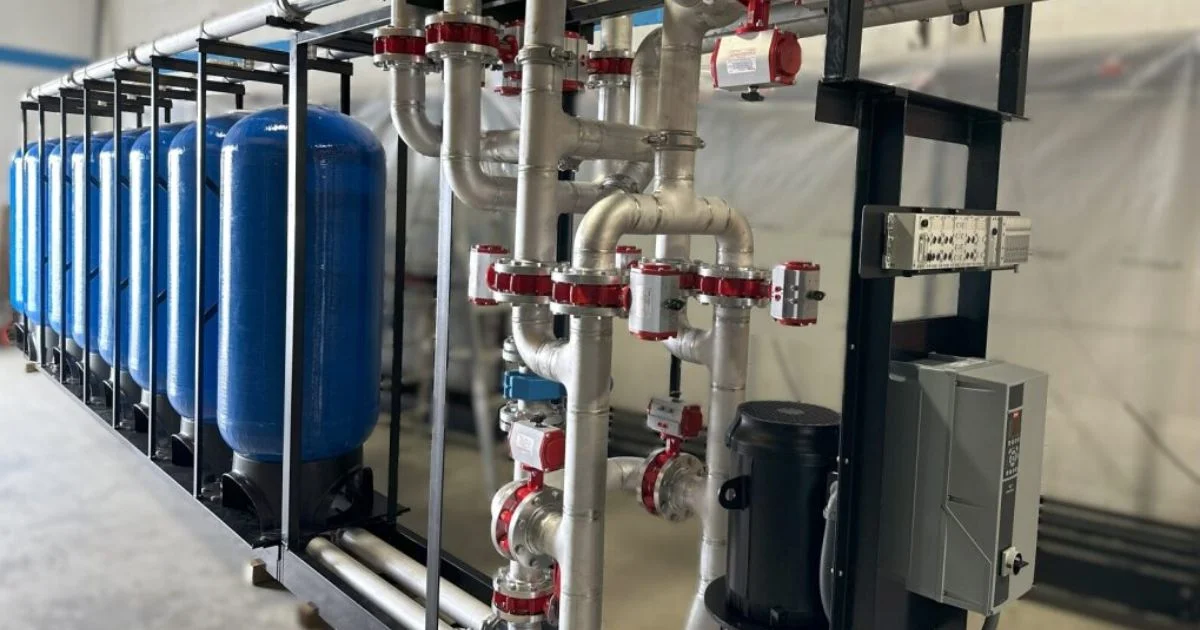
In-house building costs more than outsourcing to low-bid fabricators. Our labour rates in Cambridge exceed those of many other facilities in our industry. However, the cost of issues that can arise on-site is far more costly than the extra attention to detail we place on our systems in our fabrication process.
For municipalities under regulatory orders, First Nations communities ending long-term drinking water advisories, or industrial facilities managing compliance deadlines, system reliability matters more than initial capital cost. These are operations where performance gaps have direct consequences — for public health, regulatory standing, and continuity of service.
Considering the cost of downtime for a critical use, reliability of a deployable water treatment system is paramount. If your temporary RO system fails during a municipal emergency, you're trucking water or issuing boil advisories. If your mining operation can't treat process water, production stops.
The premium for in-house building is that knowledge stays connected. If issues arise, you're not navigating support groups trying to find someone who might know how your system was built. You're calling the people who designed it, assembled it, tested it, and started it up.
What Outsourcing Would Actually Mean
If we were to design systems in Cambridge and send our specifications to a third-party fabricator, it may reduce the capital cost. The initial quote would look better. Project economics might pencil out more favourably on paper.
But then you'd be deploying a system to a remote site or critical use where the people who fabricated the system have moved on to other projects. Where troubleshooting requires coordinating between the design team, the builder, and whoever's available for field support.
That coordination takes time that critical operations don't have. A support issue that takes an hour to resolve when you're talking directly to the design engineer can take days when it has to move through multiple parties — each of whom has partial knowledge of how the system was built and configured.
Where fine-tuning based on actual operating conditions means submitting change requests through formal channels rather than calling the engineer who sized your membrane train.
For temporary water treatment plants operating in tough conditions or supporting critical uses, that separation creates risks we want to avoid improving the quality of the system and its execution on behalf of our clients.
When your First Nations community is trying to end a decade-long drinking water advisory, or your mining operation needs treatment capacity for an upcoming production phase, or your municipality is keeping service running during upgrades, you need systems that work, not systems that were cheap to build.
Building as Engineering Continuity
The reason we don't outsource isn't about Canadian pride or keeping jobs local, though those matter.
It's because separating design from building breaks the connection that makes our mobile water treatment systems work reliably in the field. When the Professional Engineer who designed your system is on-site during assembly, walks through your container during construction, tests it before shipment, and travels to your site for start-up, you get something different than a system built to specs by the lowest bidder.
You get someone who can answer your call six months later and know exactly what you're talking about. Someone who can troubleshoot over the phone because they remember that specific setup. Someone who can guide fine-tuning because they tested that treatment train themselves.
That's not something you can outsource, no matter how detailed your specs are.
Questions about how in-house building affects system reliability for your specific use? Speak to our engineering team, who can walk through exactly why we build everything under one roof.