Solving Your Unique Water Challenges
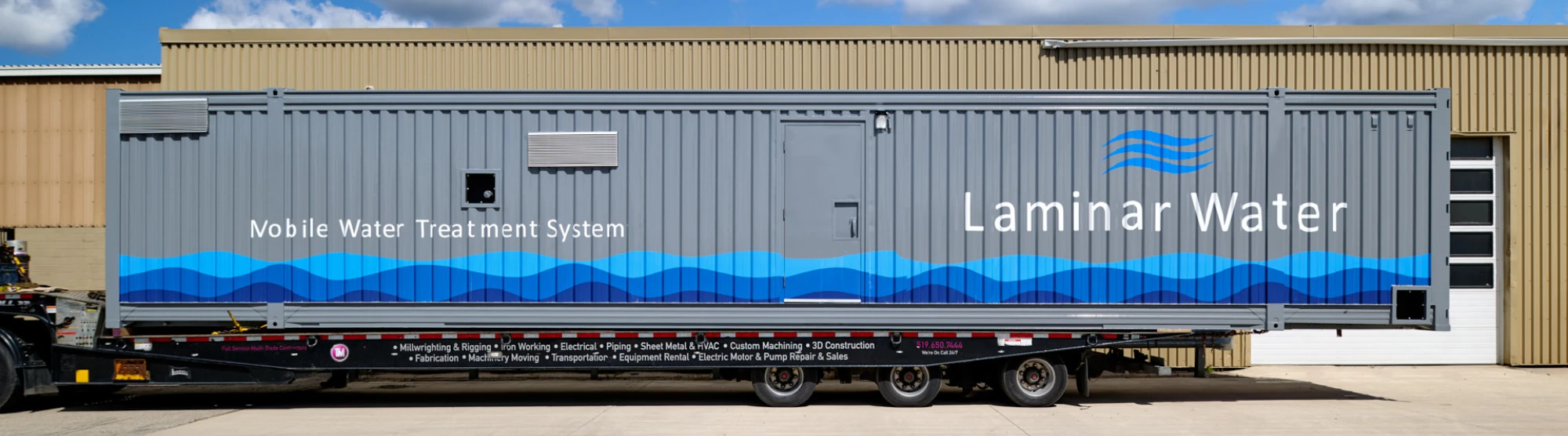
We build our containerized systems on a configurable, modular platform to create a treatment train that directly matches your influent chemistry and achieves your effluent quality targets.
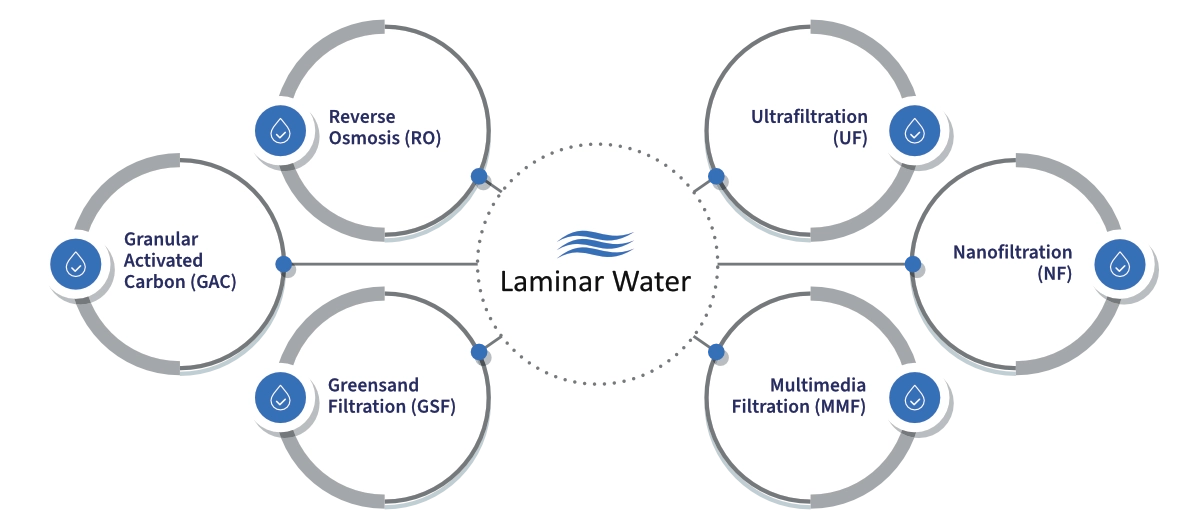
The treatment train is configured with only the technologies required for your specific water chemistry. No unnecessary extra expenses.
Whether you need to meet the flow rate demands of a small community or a large industrial application, we engineer a system sized for your needs.

Reverse Osmosis (RO) is a water purification technology that uses a semi-permeable membrane under hydraulic pressure to remove dissolved salts and impurities from a feed stream.
RO membranes are highly effective at removal of the most challenging constituents including the smallest monovalent ions like sodium and chloride. In drinking water treatment they are commonly used for removal of nitrate, heavy metals and trace amounts of synthetic organic compounds. RO is also one of the technologies available for removal of per- and polyfluoroalkyl substances (PFAS). Other monovalent ions, such as Fluoride can be readily removed by RO.
RO systems operate continuously, utilizing spiral-wound membranes housed within pressure vessels. A high-pressure pump propels feed water into these vessels, overcoming the natural osmotic pressure. This produces two distinct streams: permeate, which is the purified water, and concentrate, which contains the removed solutes. The percentage of water captured as purified water is known as Volumetric Recovery, which typically ranges from 65% to 85% for drinking water applications. Maintaining adequate cross-flow velocity on the feed side of the membrane is a key factor in proper operation, as the turbulence helps prevent fouling.
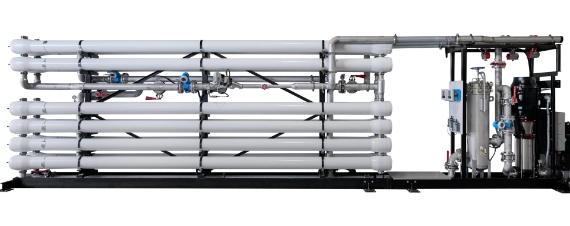
The RO membrane is sensitive. Proper pre-treatment is essential to protect it from being blocked or damaged and ensure it performs reliably for its expected lifespan.
Removal of Nitrate
TDS Reduction of Groundwater
Removal of "Forever Chemicals" (PFAS) from Groundwater
Removal of Fluoride from Groundwater
Industrial Wastewater Reuse
Producing High-Purity Water
Nitrate
Dissolved Solids (TDS)
PFAS (“Forever Chemicals)
Fluoride
Dissolved Salts
Suspended Solids
Bacteria & Viruses (without pre-treatment)
Large organic molecules
Ultrafiltration (UF) is a pressure-driven separation process that uses a membrane for physical separation. It is highly effective at removing suspended solids, colloids, bacteria, protozoa, and some viruses through size exclusion.
With membrane pore sizes typically ranging from 0.01 to 0.1 micrometers, UF provides an absolute barrier to fine particulate matter. UF membranes often employ a similar pressurized, hollow-fiber configuration to Microfiltration (MF), the key distinction is UF's smaller pore size, which allows for removal of smaller contaminants.
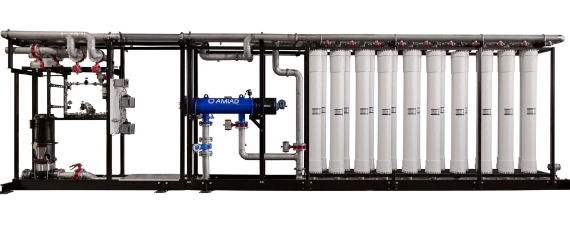
The operational cycle typically runs for 20-60 minutes, followed by a critical backwashing step to restore permeability. During a backwash, filtrate is sent backward through the membrane to dislodge accumulated foulants from the surface. This process is often aided by air scouring to provide turbulence and draining of the vessel to ensure the removal of the dislodged solids. UF is particularly valuable as a pre-treatment step ahead of reverse osmosis (RO) or nanofiltration (NF) because it removes particulates and microorganisms that cause fouling.
Removal of Suspended Solids and Pathogens from Surface Water
Pre-treatment for RO and NF systems
Lagoon Effluent Polishing
Industrial Wastewater Reuse
Suspended Solids
Pathogens (Bacteria, Protozoa)
Turbidity & Colloids
Some Viruses
Dissolved Solids (TDS)
Nitrate
Fluoride
Small organic molecules
Nanofiltration works much like Reverse Osmosis, but its rejection of contaminants is focused on larger di- or trivalent ions and dissolved organics. This allows it to operate at lower pressures, making it more energy-efficient for certain tasks.
NF systems use the same pressure vessels and system configurations as RO but employ different membranes. A key use of NF in drinking water applications is for the removal of dissolved organic molecules that can create harmful disinfection by-products when combined with chlorine. Removing these organics using NF prevents the formation of disinfection byproducts, a significant advantage for municipal water treatment.
Removal of Disinfection Byproduct Precursors (DBPs) from Surface Water
Divalent Ion Removal
Sulfate Removal
Divalent Ions
Dissolved Organic Carbon (DOC)
Disinfection Byproduct Precursors
Larger Dissolved Molecules
Monovalent Ions (e.g. Chloride)
Small, uncharged molecules
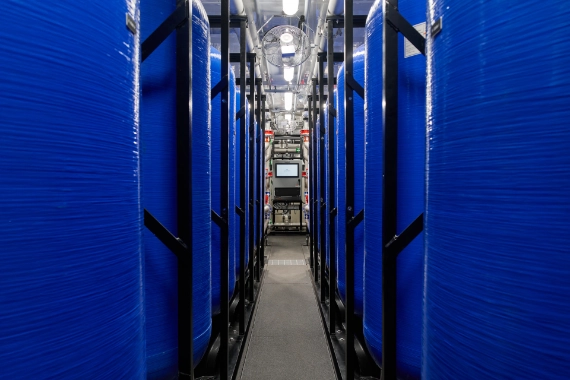
Multimedia filtration uses a media mix of engineered sand, anthracite and larger structural media to provide filtration for removal of impurities from water. This technology, also referred to as rapid sand filtration, is simple and reliable and allows removal of suspended solids, pathogenic organisms and some organic macromolecules.
MMF uses a reverse-graded, dual-media bed. A top layer of larger, less dense anthracite sits above a lower layer of smaller, denser sand. As water flows downward, the largest particles are captured in the coarse top layer, while progressively smaller particles are removed by the finer sand layer below. This design utilizes the entire depth of the filter bed for solids storage.
Surface Water Treatment
Lagoon Effluent Polishing
Industrial Wastewater Reuse
Pre-treatment for membrane systems like RO
Suspended Solids
Turbidity
Pathogenic Organisms
Some organic macromolecules
Dissolved Contaminants
Dissolved Iron & Manganese
PFAS (“Forever Chemicals)
Dissolved Salts
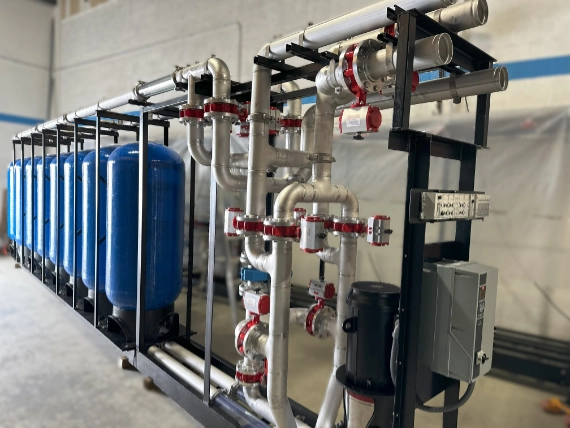
Greensand Filtration is a catalytic oxidation and filtration process that uses manganese greensand for removal of iron and manganese. This technology has been used for decades to reliably remove troublesome iron and manganese that can cause aesthetic and health problems in drinking water applications. The process functions like a multi-media filtration system but with this specialized media.
The core of the process is the media, manganese greensand, which is coated with manganese dioxide. This coating acts as a catalyst to accelerate the oxidation of dissolved iron and manganese. The process requires the continuous injection of an oxidant, such as sodium hypochlorite (bleach), which converts soluble iron and manganese into solid, filterable particles. These newly formed particles are then immediately filtered out by the media bed.
GSF is vital for treating groundwaters where the absence of oxygen has allowed iron and manganese to remain dissolved. Its most critical industrial application is as pre-treatment for Reverse Osmosis, as dissolved iron and manganese will precipitate on RO membranes and cause severe fouling, permanently reducing performance and requiring costly replacement.
Removal of Iron and Manganese from Groundwater
Pre-treatment for Reverse Osmosis
Dissolved Iron
Dissolved Manganese
Dissolved Salts
Hardness
PFAS (“Forever Chemicals”)
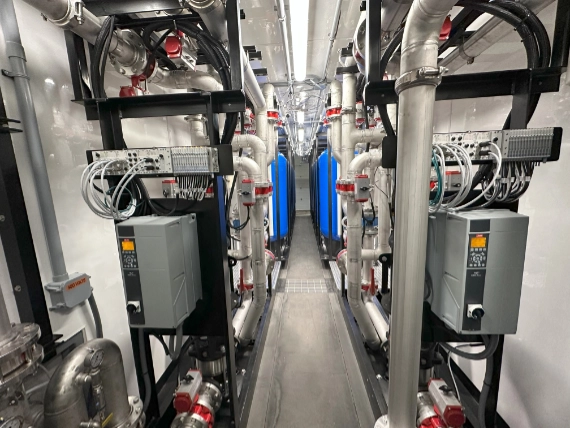
Granular Activated Carbon (GAC) is an adsorption technology, not a filtration technology. Its job isn't to physically strain out particles, but to remove dissolved chemical contaminants using a surface adsorption mechanism.
The effectiveness of GAC comes from its large internal surface area. One pound of carbon has more than 35 acres of surface area, or the equivalent of almost 100 football fields. This surface is mostly non-polar, which gives it a strong affinity for other non-polar molecules, like dissolved organic compounds. As contaminated water flows through the GAC bed, weak intermolecular forces attract these organic contaminant molecules, causing them to stick to the carbon's surface and leave the water.
GAC is a consumable medium. As its active sites become filled with contaminants, the carbon becomes "spent" or "exhausted." The point at which it can no longer effectively remove the target contaminant is known as "breakthrough." At this point, the spent GAC must be removed and replaced with fresh carbon.
Removal of “Forever Chemicals” (PFAS)
Removal of other synthetic organic compounds
Taste and Odour control
Taste & Odour Causing Compounds
PFAS (“Forever Chemicals)
Dissolved Organic Compounds
Chlorine
Pesticides & Herbicides
Particulate Matter / Suspended Solids
Dissolved Inorganic Salts
Dissolved Metals (Iron, Manganese)
The above six technologies can be installed in our advanced containerized water treatment systems, either in series or in parallel, allowing over twenty different treatment train configurations. This provides Laminar Water with the ability to rapidly customize your water treatment system to address your specific treatment needs. If you’re facing a water challenge, our engineers have the experience to find, test, and integrate a solution that meets your needs.