Mobile vs. Site-Built Water Treatment

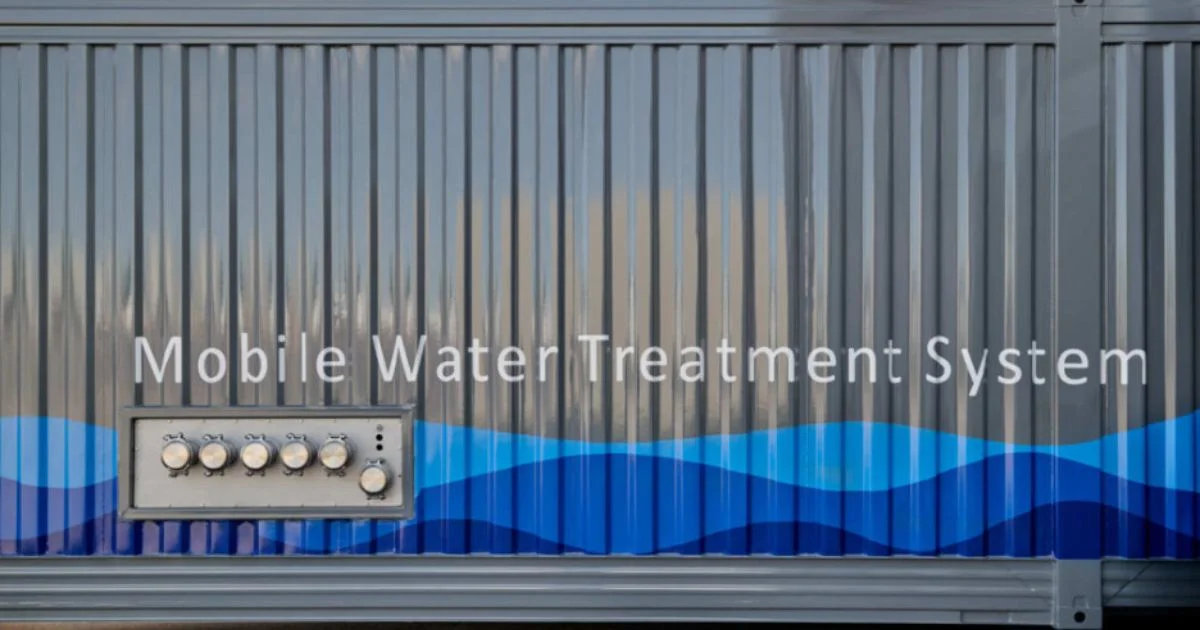
Mobile containerized water treatment systems offer a faster, more flexible alternative to traditional site-built plants. Here’s a direct comparison of the project timelines, costs, and risks for each approach.
North America's water infrastructure is aging. For municipalities and industrial operators, that means upgrading or replacing outdated facilities to meet increasingly strict regulations, on an even stricter budget. At the same time, many remote communities and sites still lack permanent, reliable drinking water infrastructure.
For years, the only answer was to build permanent, “brick-and-mortar” water treatment infrastructure. This meant designing and building a fully custom facility from the ground up; an exorbitantly costly project which could easily stretch 5 years or longer (the larger the plant, the longer it can take.)
There is, however, an alternative approach: installing one or more mobile, containerized water treatment systems.
At Laminar Water, we build a complete water treatment solution inside a standard ISO shipping container. These systems are faster to set up, more affordable, and much more flexible than a traditional plant.
To see just how different the two approaches are, let's first break down the process and risks of the traditional construction model.
The Old Model: Timelines and Risks of a Site-Built Water Treatment Plant
Building a traditional water treatment plant is a long, process. You have to finish one phase completely before starting the next, with numerous potential delays and problems at many points along the way.
Phase 1: Design & Engineering (1-2 Years)
The first one to two years are spent on design. Since every plant is a custom job, the engineering process essentially "reinvents the wheel" every time. This means a lot of fieldwork: detailed site surveys, geological assessments to check ground conditions, and complex hydraulic modeling to map out water flow. All this work has to happen before any construction can start.
Phase 2: Permitting, Site Work & Construction (1-2+ Years)
After the design is approved, it's time for site work and construction, which can take another year or two, or more. Anyone who has worked on a public works project knows this stage is famous for delays.
Delay isn’t always the result of human error; on-site work like clearing land, digging, and pouring concrete foundations depends entirely on the weather. A long stretch of rain or cold can set the project back for weeks. Unexpected ground conditions, like hitting rock or finding unstable soil, can also stop work and force a redesign, which means more back-and-forth for the engineers and architects.
The construction itself is a sequence: first the building goes up, then comes the detailed work of installing all the equipment, piping, electrical systems, and controls. This involves a lot of different subcontractors, and if one trade is delayed, it can easily push back the entire schedule.
Phase 3: Commissioning & Rework
The final stage before a plant can go online is commissioning. After all construction is finished, the work of on-site system integration, testing, and validation begins. It is often during this phase that design flaws or installation errors are found. These issues require costly and time-consuming on-site rework, further delaying the delivery of treated water.
This multi-year process creates a prolonged period of risk. While a project drags on, a community could be stuck with water that doesn't meet safety standards. An industrial site might not be able to operate and generate revenue. A whole region could be left without a reliable water supply. These are serious economic and public health risks that come with the traditional way of building.
The Advantages of a Mobile Water Treatment System
Mobile systems are a direct answer to the timeline, cost, and quality problems of traditional construction.
Faster Deployment
The biggest benefit of mobile water treatment is speed. A factory-built system can be on-site and running in months or weeks, not years. This speed helps to lower the economic and public health risks that come with long project delays.
How is this possible? The construction process isn't linear anymore. The work happens in parallel: while your site is being prepared, we're building and assembling the entire water treatment system inside a container at our factory. Building indoors also means no weather delays and a predictable production schedule.
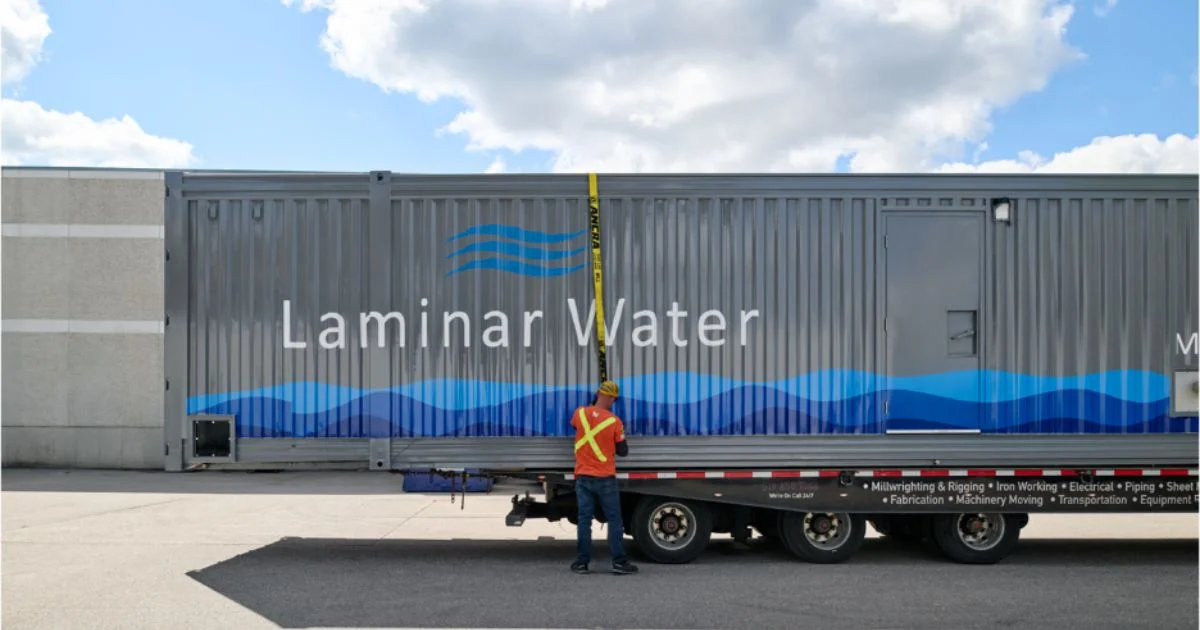
The coordination is simpler, too. We use standard 53-foot intermodal shipping containers, which classifies the system as standard cargo, not an oversized load. This simplifies logistics, reduces special permitting, and lowers transportation costs by road, rail, or sea.
Every system is also fully assembled, integrated, and pre-tested before it leaves the factory, which makes commissioning quick. Once it arrives, the unit is craned onto the pad, connected to power, and piping. From there, you can begin producing safe, clean water within days.
Predictable Costs & Lower Operating Expenses
The mobile model gives you more certainty on costs because it avoids the big financial risks of a site-built project. Traditional projects often go over budget from unpredictable expenses like major civil works, on-site labour, and weather delays. A factory-build process completely sidesteps these issues; in our controlled factory environment, you don't have to worry about missing contractors or poor on-site conditions. The cost and timeline are both completely predictable.
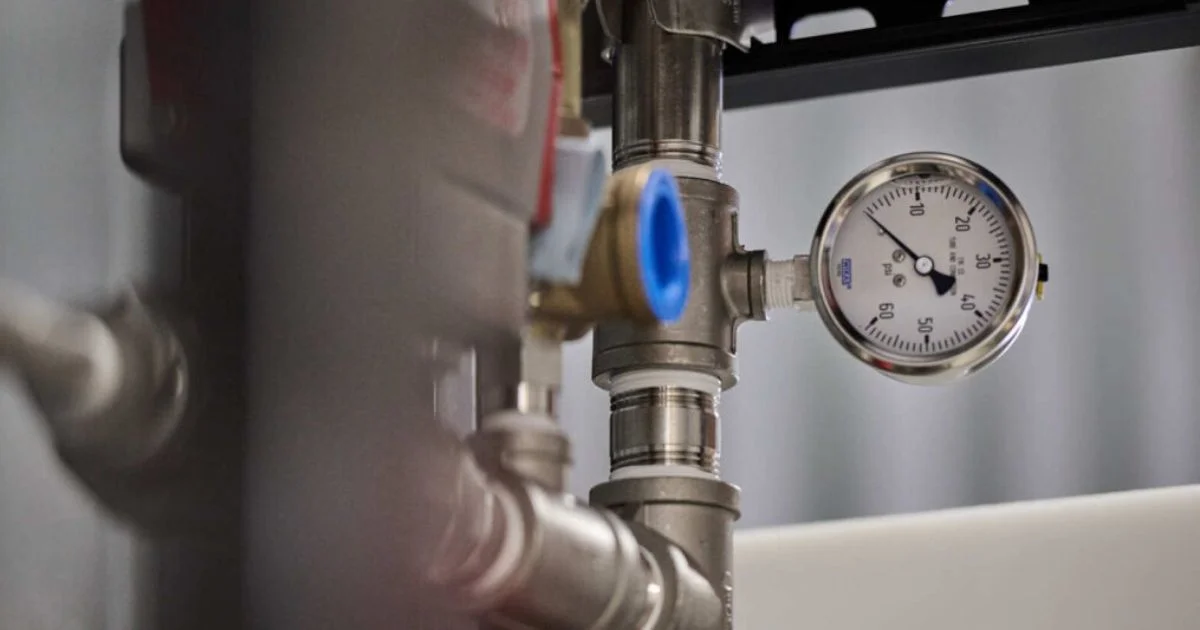
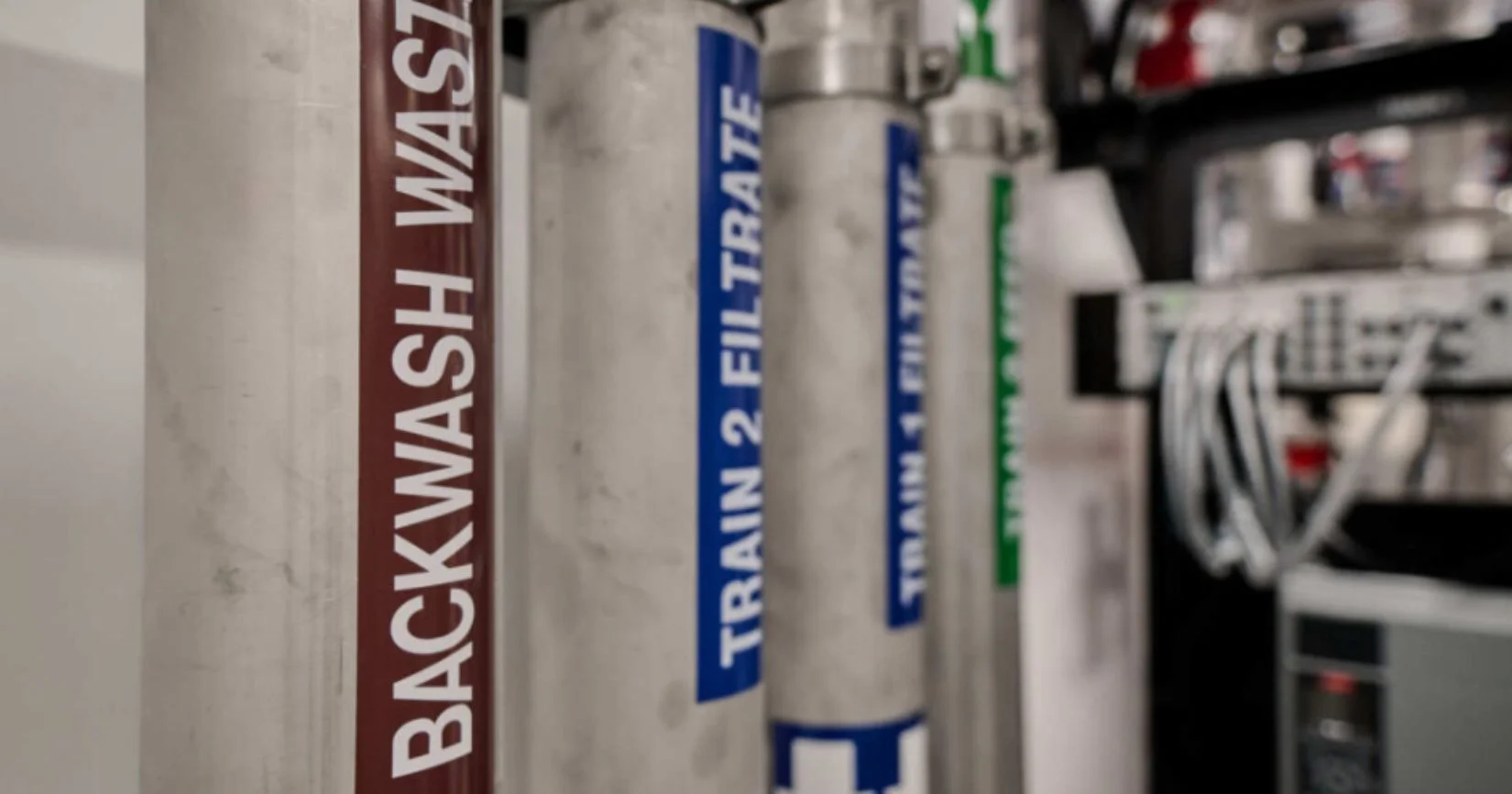
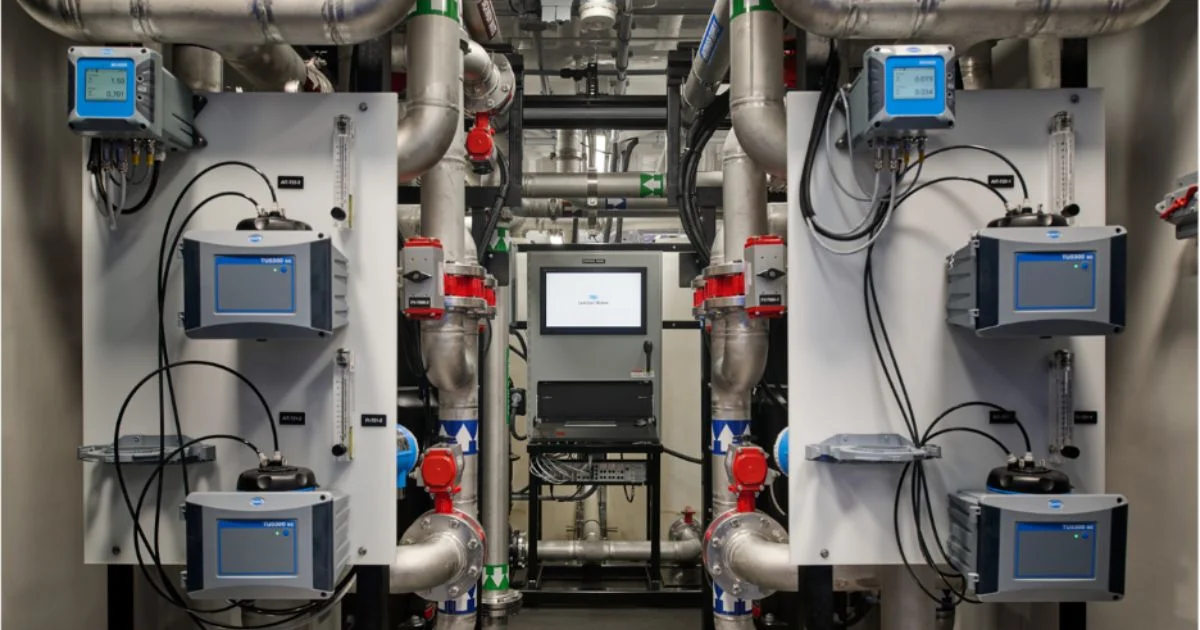
The savings continue with lower operating costs. Our engineering philosophy is shaped by decades of operational experience: every design choice is intended to reduce guesswork for the operator, simplify maintenance, and maximize uptime. Practical details, like including clear pipe spools for quick visual checks and standardized pipe sizes, make operation and maintenance straightforward. This standardization also means spare parts are easy to get from North American suppliers, keeping downtime to a minimum.
A containerized system is also a different type of asset. A traditional plant is a sunk cost, permanently tied to one location. If your needs change, you can't move it. A containerized system, on the other hand, is a mobile asset. You can move it to a new site, use it for a different purpose, or sell it.
Durability & Quality Control
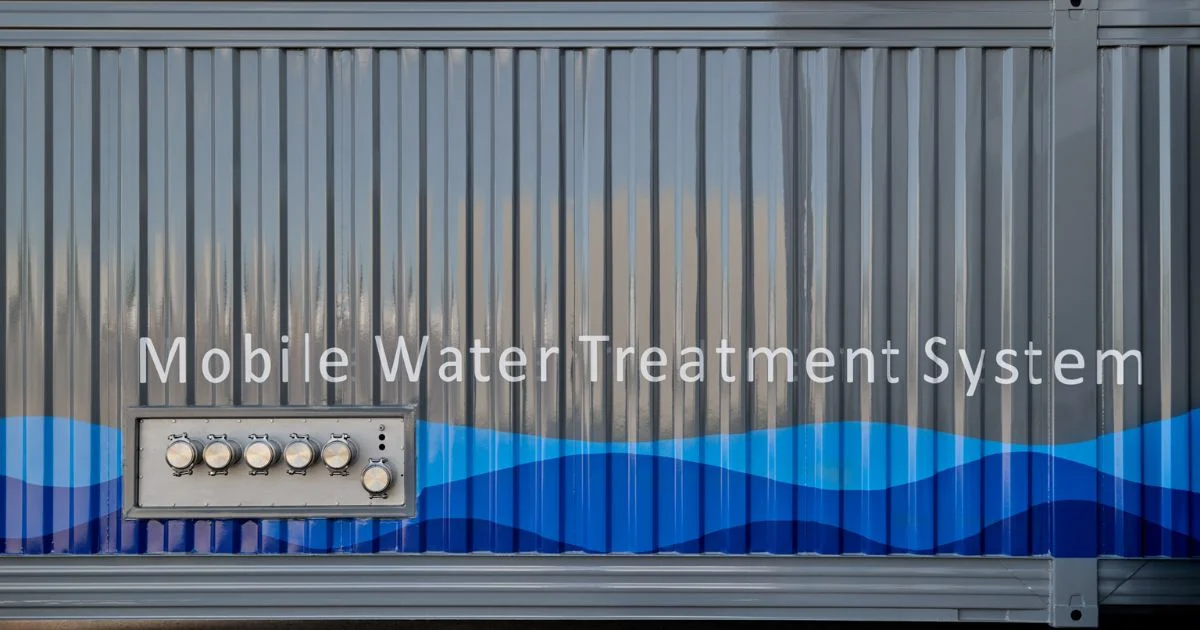
Our systems are built to last, starting with the enclosure. We use 53-foot intermodal shipping containers made from high-strength, corrosion-resistant Corten weathering steel.
The corrugated steel walls and reinforced beams create a wind-and-watertight shell that protects the technology inside and deters unauthorized access. These containers are engineered to be stacked nine-high while fully loaded and withstand hurricane-force winds and 50-foot waves at sea, so they can handle harsh weather and physical wear.
This durability extends to performance in any climate. The insulated, all-weather housing includes a redundant climate control system. With two dedicated HVAC units (each able to heat or cool the entire container), three recirculation fans, and a supplemental heater, the system maintains a stable internal temperature to protect sensitive equipment and water quality in any North American climate. The redundancy means the system will stay operational even if a major climate control component fails.
The modular design also makes the system flexible. You can install the capacity needed today and add new, pre-engineered modules as demand grows. This allows you to scale your treatment capacity as needed without overbuilding from the start.
Finally, building in a factory gives a level of quality control that is hard to match on a construction site. This isn’t a high-volume assembly line; every system is assembled in Cambridge, Ontario, under the direct supervision of the Professional Engineers who designed it.
A Configurable, Modular Platform
The container is the enclosure, but the real value is the treatment process inside. A mobile water system isn't a one-size-fits-all product. It's a configurable platform designed to solve specific water chemistry challenges.
We build our systems using a modular treatment train approach. This means we combine different core technologies to create a process that directly matches your raw water chemistry and delivers the water quality you need. This approach is cost-effective by design because the system is configured with only the technologies required for your specific problem. No unnecessary extra expenses.
Whether you need to remove dissolved salts and PFAS with Reverse Osmosis (RO), filter out iron and manganese with Greensand Filtration, or control taste and odour with Granular Activated Carbon (GAC), the system is engineered to provide the right solution.
Make the Right Choice for Today's Water Challenges
For today's water infrastructure challenges, a mobile, containerized system has clear benefits over a traditional plant. Mobile solutions are faster to deploy, give you control over costs, and are more flexible. They cut project timelines from years down to weeks, offer budget certainty by avoiding the risks of on-site construction, and give you a high-quality asset that can be scaled or moved as your needs change.
This is why containerized systems are no longer just for temporary problems; they are becoming the new standard for permanent water treatment. That's particularly true when the system comes from a company that only builds mobile water solutions.
Other companies have a mobile water division. At Laminar Water, we are a mobile water company.
We were founded and are led by Professional Engineers with a combined 50-plus years of direct experience. We engineer and build mobile, containerized water treatment systems at our facility in Cambridge, Ontario, where the designers themselves oversee the assembly.
That experience has taught us what breaks under pressure and what lasts. To see how a system built to last can solve your water challenges, contact our team for a free problem assessment.