What is Ultrafiltration and How Does It Work?

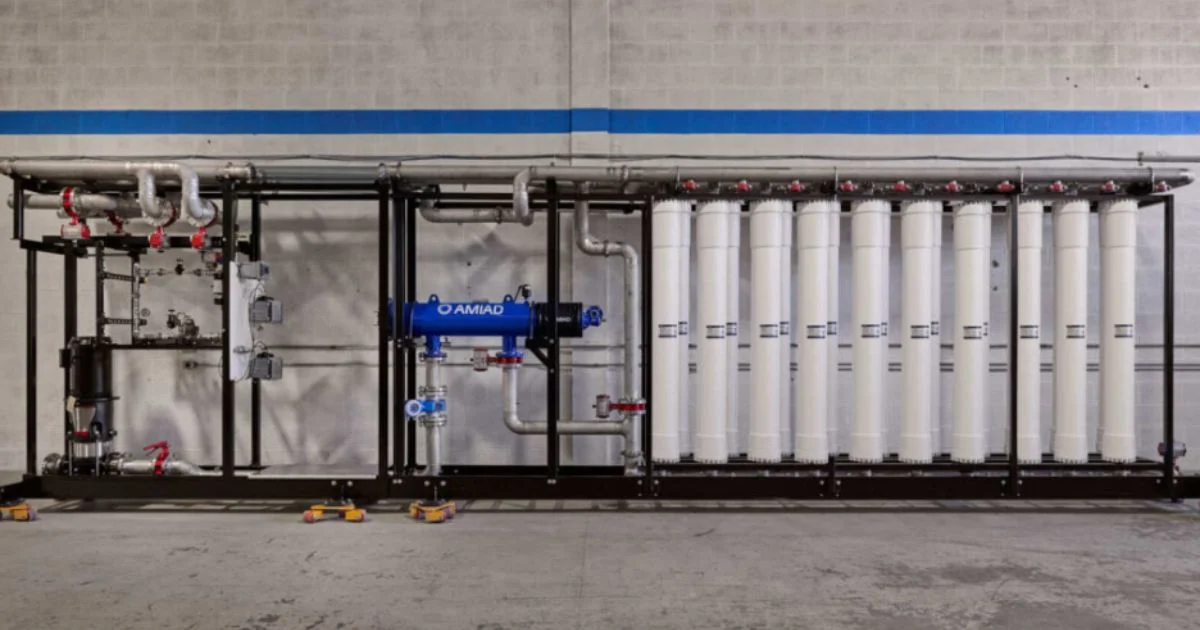
Ultrafiltration is a core technology in Laminar Water's containerized water treatment plants. Learn what Ultrafiltration is, how it works, and the applications where it provides the most value.
Note: This post is a general introduction written by our marketing team and reviewed for technical accuracy by our engineers. For in-depth analysis of a specific technology or application, please contact our engineering team.
A central challenge in water treatment is producing consistently high-quality water from sources that are often unpredictable. A single episode of intense rainfall, for example, can drastically alter the contaminant profile of the incoming water.
Ultrafiltration (UF) is a pressure-driven membrane technology that directly addresses this challenge. It uses microscopic pores to physically block contaminants based on their size, allowing only purified water to pass through. Because the primary removal mechanism is size exclusion, its performance remains stable even when the quality of feed water fluctuates.
The treatment train inside our containerized water treatment plants often incorporates membrane-based technologies, including Ultrafiltration. Here, we’ll give you a primer on what Ultrafiltration is, how it works, and its role in our mobile water treatment solutions.
What Is Ultrafiltration?
Ultrafiltration (UF) is a pressure-driven, membrane-based separation process that removes suspended solids, colloids, bacteria, and viruses by physical size exclusion. In principle, it is similar to Microfiltration, but UF’s smaller membrane pore size allows for the removal of much smaller particles.
The precision of a UF system is defined by the membrane's pore size. These pores are extremely fine, typically ranging from 0.01 to 0.1 micrometres. For comparison, a human hair is about 70 micrometres wide.
UF membranes are made from advanced polymeric or ceramic materials. Common polymers include polyethersulfone (PES), polysulfone (PSf), and polyvinylidene fluoride (PVDF). Ceramic membranes are used where high temperatures, aggressive chemicals, or abrasion are a concern.
These membranes are assembled into modules. The main configurations are hollow fibre, flat-sheet, spiral-wound, and tubular. Of these, hollow-fibre modules are the most widely used in modern water treatment because they pack a high surface area into a small volume and are well-suited to backwashing and modular scaling.
However, a system’s overall performance depends on more than just membrane design. It is also a function of the material's chemical properties, its mechanical strength, and the operational controls in place to manage the inevitable buildup of filtered contaminants, a process known as fouling.
What Does Ultrafiltration Remove from Water?
The UF membrane acts as a physical barrier to particulates and macromolecules. Specifically, Ultrafiltration is highly effective at removing:
Turbidity and suspended solids, the fine particles that make water appear cloudy. The Guidelines for Canadian Drinking Water recommend a turbidity of 1.0 NTU or less although effluent from UF often leads to turbidity values below 0.1 NTU.
Colloids, microscopic particles that stay suspended in water.
Bacteria
Protozoa (such as Giardia and Cryptosporidium)
Some viruses
How the Ultrafiltration Process Works
The Ultrafiltration process is a continuous loop of filtration and cleaning. A well-designed system automates this cycle for consistent performance and to extend the life of the membranes.
The Filtration Cycle
Ultrafiltration works by pushing raw feed water across or through a membrane using a modest pressure gradient. This allows the water and low-molecular-weight solutes (like dissolved salts) pass through the membrane’s microscopic pores. This purified water is called the filtrate.
At the same time, larger particles, colloids, bacteria, and some macromolecules are physically blocked. They collect on the surface of the membrane as a layer of what are known as foulants.
A typical filtration cycle runs for 20 to 60 minutes before the system automatically starts a cleaning cycle to remove this buildup and restore permeability.
The Automated Cleaning Cycle (Backwash)
To keep the system running well, it periodically runs an automated backwash sequence.
Backwashing: The flow is reversed, and a portion of the clean filtrate is sent backwards through the membrane. This hydraulic force lifts and pushes the accumulated layer of foulants off the membrane surface.
Air Scouring: To help dislodge more stubborn solids, compressed air is injected to create turbulence at the membrane surface.
Draining: Finally, the membrane vessel is drained to flush the dislodged solids out of the system.
Fouling Control and System Controls
The main operational challenge in any membrane filtration system is managing the buildup of contaminants on the membrane surface. Fouling modes include particulate, organic, biological, and scaling.
Modern UF systems manage this with smart controls. The system monitors indicators like transmembrane pressure (the pressure difference across the membrane) or flux (the rate of water production). When the system detects an increase in pressure or a drop in flow, it automatically triggers a more intensive cleaning cycle that uses chemicals to enhance the removal of foulants. These chemical cleans can include more regular maintenance cleans as well as periodic intensive cleans called recovery cleans.
Where Ultrafiltration Makes a Difference
Ultrafiltration is widely applied across municipal and industrial water treatment. It is particularly effective in the following areas.
1. Potable Water Production from Surface Water
Ultrafiltration protects and improves the performance of more delicate membrane-based filtration technologies.
One of the most common applications for UF is the direct treatment of surface water (from lakes, rivers, and reservoirs) to produce safe drinking water. The UF membrane removes pathogens like bacteria, viruses, and protozoa to meet or exceed regulatory standards such as the Canadian Drinking Water Guidelines. A major benefit of this approach is its ability to produce water of a consistent, high quality.
UF ensures the output remains stable and safe, handling challenges from high turbidity after a storm to seasonal shifts in contaminants.
2. Wastewater Reclamation and Industrial Process-Water Recycling
UF makes it possible to safely reuse wastewater, turning a liability into a resource.
UF is an important technology for both municipal wastewater reclamation and recycling industrial process water. It effectively removes suspended solids and pathogens from treated effluent, producing water that is safe for environmental discharge or for reuse in applications like irrigation. In industrial settings, such as power plants, refineries, and mining operations, UF is used to treat complex wastewater streams that may contain oils, emulsions, and colloidal materials.
This makes Ultrafiltration a key technology for water reclamation, helping municipalities meet environmental standards and industrial sites reduce their water footprint.
3. Pre-treatment for Reverse Osmosis (RO) and Nanofiltration (NF)
Ultrafiltration acts protects and improves the performance more delicate membrane-based filtration technologies.
UF is particularly valuable as a pre-treatment step for finer filtration systems like reverse osmosis (RO) and nanofiltration (NF). RO and NF membranes have extremely fine pores designed to remove dissolved salts and are easily fouled or damaged by particulates, microorganisms, and colloidal matter.
By removing these fouling contaminants, UF pre-treatment protects the investment in RO and NF systems, extending membrane life and ensuring consistent operational efficiency.
How We Bring Ultrafiltration Where It’s Needed Most
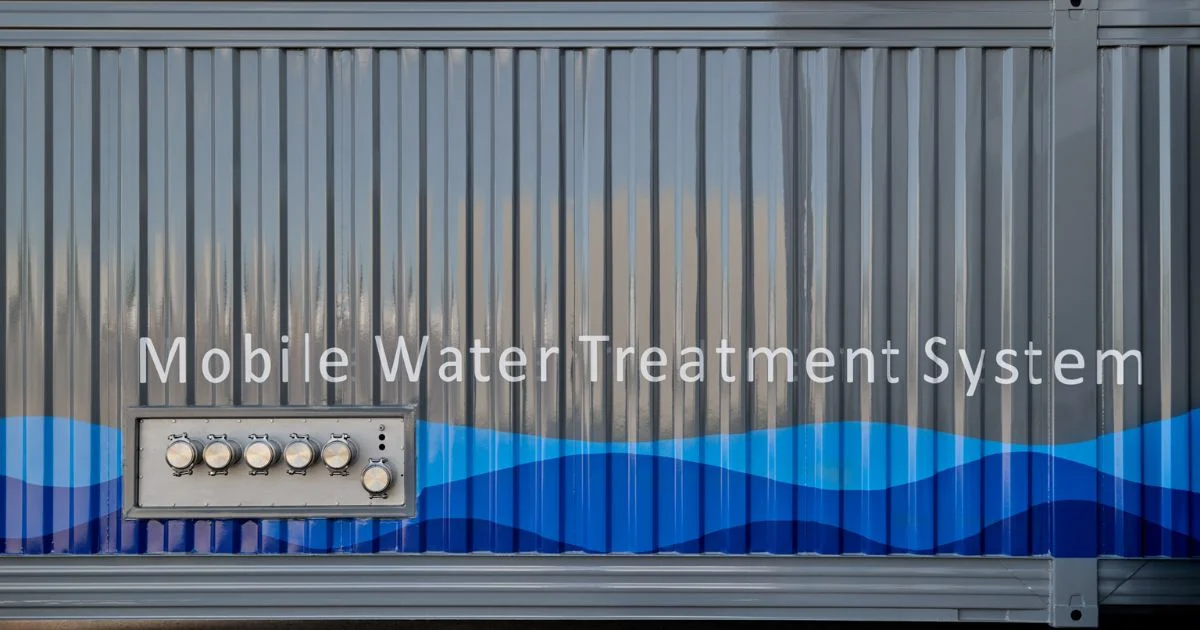
While a powerful technology on its own, Ultrafiltration becomes an even more practical solution when engineered into a rapidly deployable, self-contained system. Laminar Water designs containerized water treatment plants that serve as an effective alternative to brick-and-mortar infrastructure for remote or urgent water challenges.
As mentioned, the treatment train in each system is engineered for the specific water chemistry and quality goals of the project. Ultrafiltration is often a key technology in that process. When a project calls for it, Laminar Water uses UF membranes made with PVDF material and a pore size of 0.01 microns. Up to two trains of UF can be installed in each deployable containerized water treatment system with a total flow capacity of up to 3.5 million litres per day, or the amount of water a community of approximately 10,000 people would use.
Not every system requires Ultrafiltration; we engineer the treatment train based on the specific chemistry of each customer’s influent water and the effluent quality they need. When Ultrafiltration is included, customers benefit from the unique platform that we have developed.
Rapid, Containerized Deployment
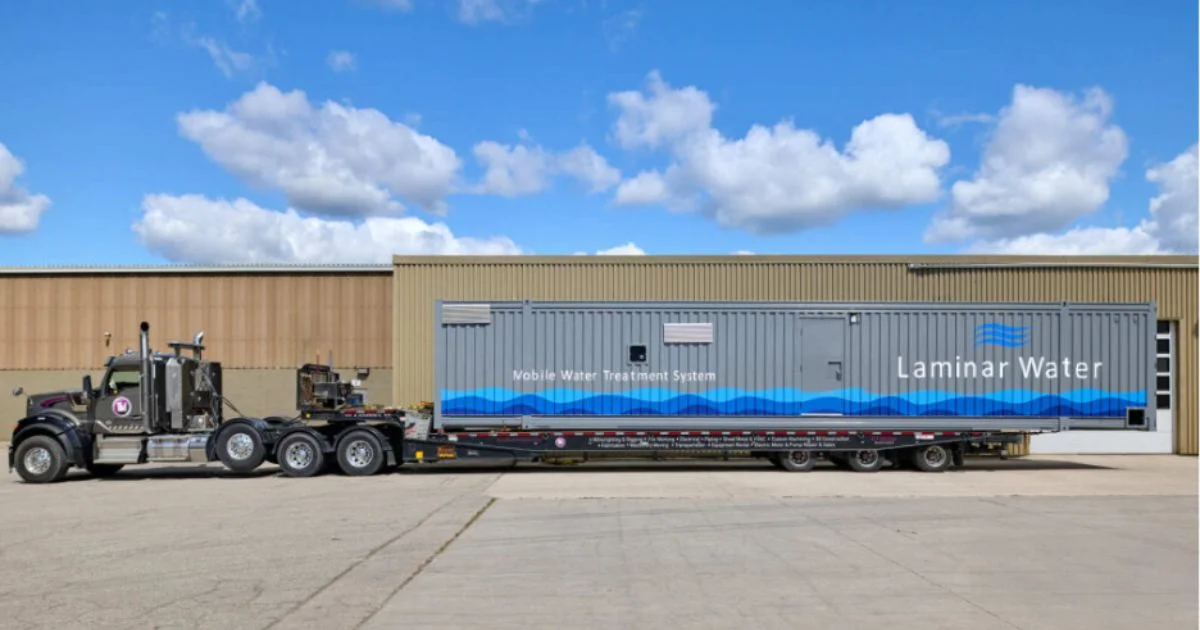
Laminar Water systems are housed in standard shipping containers and can be set up quickly on-site. This model is well-suited for emergency response, temporary industrial needs, or communities waiting for permanent solutions. It helps avoid the long lead times (often four to five years) associated with custom-built treatment plants.
Mobility and Scalability
Containerized UF systems can be transported by truck, rail, or ship to almost any location. The systems are also modular, meaning they can be scaled up by adding more units. This allows multiple units to be operated in parallel to serve larger communities, providing flexibility as needs grow or change.
Turnkey Operation
Each system is pre-engineered with integrated pumps, controls, and automated cleaning protocols. This turnkey, "plug-and-play" design allows for a quick setup with minimal operator training, a key benefit for remote or temporary locations that may not have specialized personnel to run complex traditional treatment systems.
A Modern Approach to Clean Water
Ultrafiltration is an energy-efficient membrane technology that provides a physical barrier against the most common waterborne contaminants. Its ability to produce consistently high-quality water with minimal chemical use makes it a key part of modern, sustainable water management.
When this technology is integrated into a modular, containerized platform, it becomes a practical solution for providing safe water to remote communities, industrial sites, and emergency response operations.
If your organization is dealing with issues related to water access, quality, or infrastructure, the next step is a technical consultation. We offer free problem assessment to help you evaluate your specific water treatment needs and discuss whether a containerized Ultrafiltration system could be a suitable and rapidly deployable solution for your application.