What You Should Know About PFAS Water Treatment

PFAS removal is an important application of modern water treatment systems. Learn the key challenges of PFAS water treatment, the current regulations, and the proven technologies we use to solve the problem.
Note: This post is a general introduction written by our marketing team and reviewed for technical accuracy by our engineers. For in-depth analysis of a specific technology or application, please contact our engineering team.
The contamination of drinking water sources by Per- and Polyfluoroalkyl Substances (PFAS) is one of the most serious environmental challenges we face today. A growing body of scientific research links PFAS exposure to a broad range of severe health conditions; at the same time, they cause profound damage to ecosystems by bioaccumulating in wildlife.
Addressing complex contaminants like PFAS is a core application of Laminar Water's modular water treatment systems. This post aims to provide an overview of PFAS and the proven water treatment technologies available for PFAS removal: Granular Activated Carbon (GAC) and high-pressure membrane systems like Nanofiltration (NF) and Reverse Osmosis (RO).
What are “Forever Chemicals” or PFAS?
PFAS are a family of thousands of synthetic compounds (some estimates suggest as many as 14,000) that do not break down through natural processes. They can persist in water and the environment for centuries, which is why many people refer to them as "forever chemicals."
PFAS are defined by a carbon-fluorine (C-F) bond. This chemical bond is one of the strongest in organic chemistry, and it makes PFAS exceptionally stable and resistant to heat, oil, water, and stains. While these properties made them incredibly useful in manufacturing, it’s also what makes them so problematic to people, animals, and the environment.
A growing body of toxicological and epidemiological research links PFAS exposure to serious, chronic health conditions affecting nearly every major biological system. The chemicals accumulate in the body over time, particularly in the blood, liver, and kidneys. In the environment, they bioaccumulate in wildlife, damaging ecosystems.
Where Do PFAS Come From?
PFAS were first developed around World War II and commercialized throughout the 1940s. However, it would be decades before the public and regulatory agencies recognized their persistent, toxicological effects. By the time regulations on PFAS finally came into force, these chemicals had already been released into the environment in huge quantities.
The most common "long-chain" PFAS compounds, PFOA (perfluorooctanoic acid) and PFOS (perfluorooctane sulfonate), became widespread as key ingredients in products like non-stick cookware, stain- and water-resistant clothing, and grease-resistant food packaging. These products shed PFAS both during use and after disposal in landfills, contaminating soil and groundwater.
“Long-chain” PFAS were also key ingredients in Aqueous Film-Forming Foam (AFFF), a firefighting foam that had been used since the 1960s at military bases, airports, and municipal fire departments. Decades of use in training exercises and emergencies led to the discharge of highly concentrated PFAS into the ground.
Manufacturers that produced or used PFAS were also a source of contamination; discharges released these chemicals into wastewater streams, while air emissions deposited them over wide surrounding areas.
Once in the soil and water, PFAS are transported over vast distances by water currents and atmospheric cycles, leading to their detection in the most remote environments on Earth, from snow on Mount Everest to the deep ocean. Their presence in rain and snow confirms they are now part of the global water cycle.
PFAS Water Treatment Regulations in North America
After decades of limited oversight, both Canada and the United States now regulate the quantity of PFAS that is acceptable in drinking water. As always, these are subject to change and differ by jurisdiction; for the most current requirements, it is always best to consult the responsible regulatory agency directly.
Canada
In August 2024, Health Canada released its updated Objective for Canadian Drinking Water Quality for PFAS. It establishes a "precautionary group-based" threshold of 30 nanograms per litre (ng/L), which is equivalent to 30 ppt, for the sum of 25 specific PFAS compounds.
While these objectives are federal, responsibility for implementation and enforcement rests with individual provinces and territories. Health Canada encourages districts to keep PFAS levels as low as reasonably achievable (ALARA), but the path to implementation varies. In Ontario, for example, the Ministry of the Environment, Conservation and Parks (MECP) are still reviewing the new 30 ng/L objective to determine how it might be implemented.
United States
In April 2024, the U.S. Environmental Protection Agency (EPA) finalized the first-ever National Primary Drinking Water Regulation (NPDWR) for PFAS, which established nationwide Maximum Contaminant Levels (MCLs) for six PFAS with an implementation deadline of 2029:
PFOA and PFOS: 4.0 ppt
PFHxS, PFNA, and GenX: 10 ppt
Mixtures of PFHxS, PFNA, GenX, and PFBS: Hazard Index of 1.0
In May 2025, the EPA announced its intent to extend the compliance deadline for PFOA and PFOS to 2031, and to rescind and reconsider the regulations for the other four PFAS (PFHxS, PFNA, GenX, and the mixture).
However, the regulatory landscape for PFAS in the US is moving fast. Several individual states have established or proposed regulations for PFAS that meet or exceed the limits in the EPA’s original regulation from April 2024, and more are expected to follow.
Proven Technologies for PFAS Water Treatment
Because PFAS are so difficult to break down, the established treatment methods focus on separating them from water rather than destroying them. This isn't a one-size-fits-all process. Designing an effective treatment system requires a careful analysis of the specific water chemistry, including the types and concentrations of PFAS and any other organic compounds that could interfere with the process.
Granular Activated Carbon (GAC)
GAC is the most established technology for PFAS removal. It works through adsorption, a surface-level mechanism, not physical filtration. The effectiveness of GAC comes from its massive internal surface area; a single pound of GAC has over 35 acres of surface area. This surface is mostly non-polar, giving it a strong affinity for other non-polar molecules like PFAS, which causes them to stick to the carbon's surface as the water passes through.
GAC is a consumable medium. Once its active sites are full, it is considered "spent," and the point where the target contaminant starts getting through is called "breakthrough." At this point, the spent GAC must be removed and replaced.
The stable, non-polar chemical structure of these larger PFAS molecules makes them well-suited for GAC adsorption.
GAC is highly effective at removing long-chain PFAS, such as the regulated compounds PFOA and PFOS. Its performance is weaker on short-chain PFAS (e.g., PFBS, PFBA). These smaller, more mobile molecules do not adsorb as strongly and will "breakthrough" the carbon bed much faster. This is important to consider, as manufacturers have shifted to using short-chain PFAS as replacements for long-chain compounds.
High-Pressure Membranes (Reverse Osmosis & Nanofiltration)
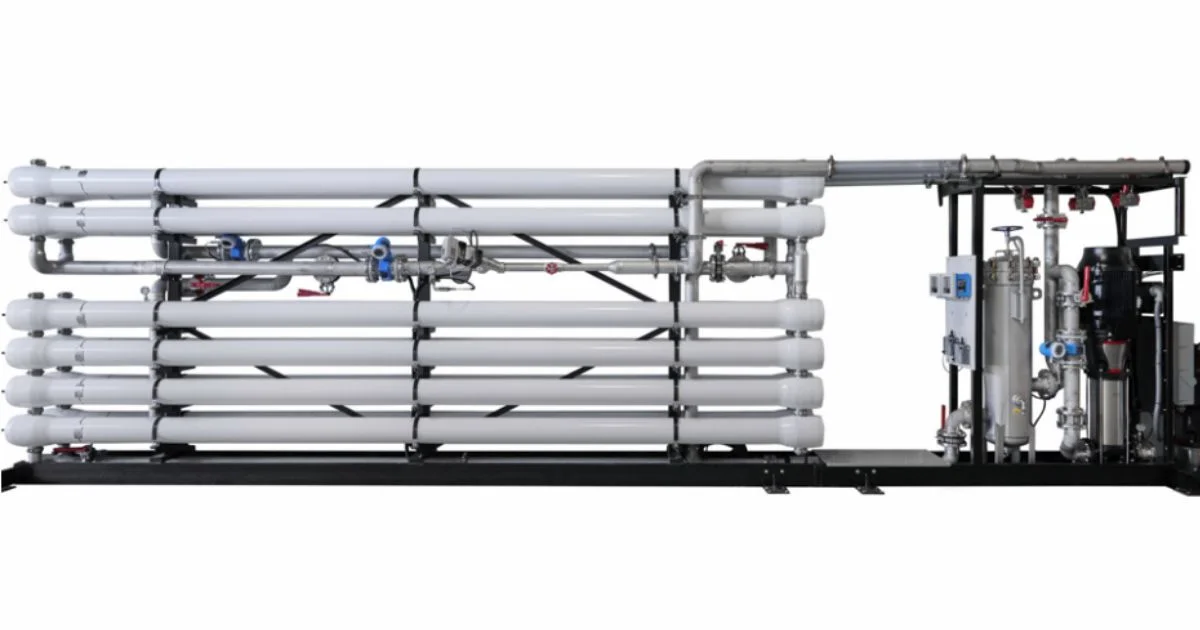
Reverse Osmosis can remove up to 99% of PFOA and PFOS, the two most common types of PFAS, as well as several other specific compounds.
In these systems, high pressure is used to force water through a semi-permeable spiral-wound membrane. The pressure required varies depending on the water source, from below 300 psi for groundwater to as high as 2,000 psi for seawater. The system produces two streams: "permeate" (the purified water) and "concentrate" (a waste stream containing the removed PFAS and other contaminants). For drinking water applications, recovery rates typically range from 65% to 85%. Because the membranes are sensitive to fouling, effective pretreatment (like Ultrafiltration) is critical to remove debris and protect the system.
The main challenge is the creation of a liquid waste stream (often called concentrate or brine). This stream contains a high concentration of the removed PFAS and other contaminants, and its management and disposal can be logistically complex and expensive.
RO and NF systems are also more energy-intensive than GAC due to the high pressures required.
Treating PFAS Quickly & Effectively
Water sources are frequently contaminated with a mix of long- and short-chain PFAS, plus other co-contaminants that can interfere with treatment. Because of this, a single treatment technology is often insufficient.
The modern approach is a multi-technology treatment train that combines the strengths of different systems. For example, an effective configuration might use Ultrafiltration for pre-treatment to protect downstream equipment, followed by Reverse Osmosis for bulk removal of all PFAS types, and then a smaller GAC system to "polish" the treated water.
However, traditional water treatment plants are slow and expensive to build, often taking four to five years or more from project start to completion. This timeline is unworkable for communities facing immediate contamination issues or for industries with temporary operational needs.
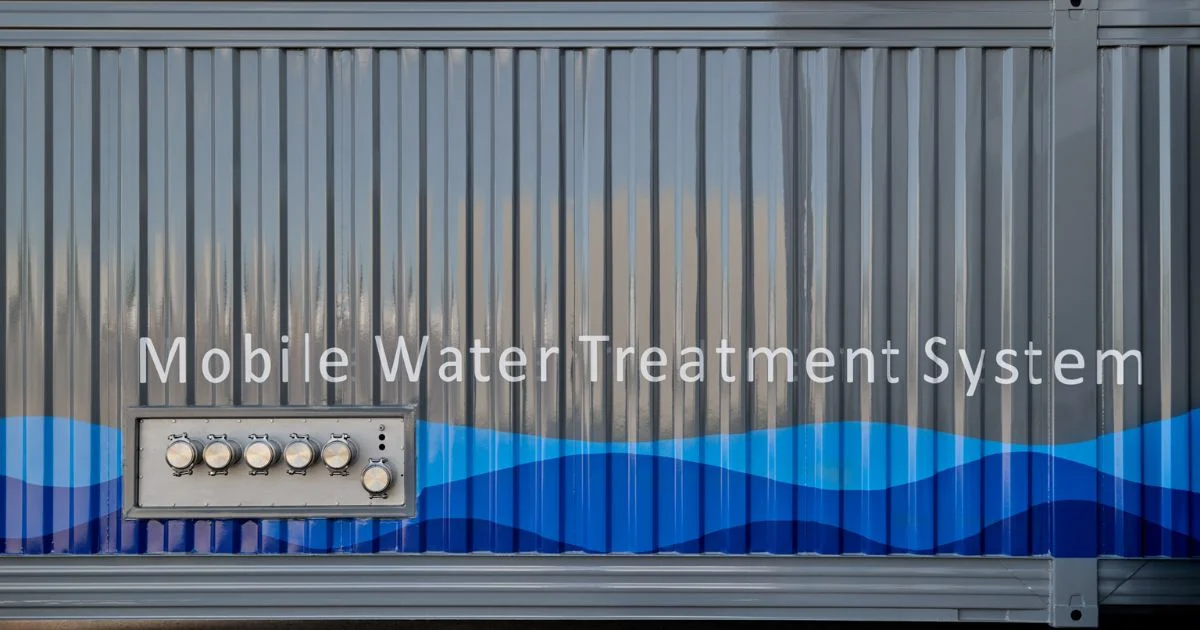
Laminar Water's containerized and modular systems are designed to overcome the primary obstacles of traditional infrastructure projects. Our containerized systems integrate the most effective technologies, including Granular Activated Carbon, Nanofiltration, and Reverse Osmosis, into a single, compact unit engineered to remove the specific PFAS profile of a water source. Most importantly, we can deliver a pre-engineered, factory-assembled, and fully tested systems directly to your site within months or weeks, not years.
Take Control of Your Water Quality
PFAS contamination presents a complex problem, but it's one that can be solved. As regulations in both Canada and the United States continue to evolve, the pressure is on for communities and industries to act. Fortunately, the technologies to remove these persistent chemicals are well-established, and modern containerized systems mean that effective solutions can be put in place faster and more flexibly than ever before.
Of course, every water source has a unique chemistry, and every facility has different operational goals. Finding the right combination of technologies for your specific situation is the key to success. If you're working through this challenge and want to discuss your options, our team can help you map out a solution. It starts with a simple conversation and a free assessment of your water treatment needs.