When is Reverse Osmosis Needed for Water Treatment?

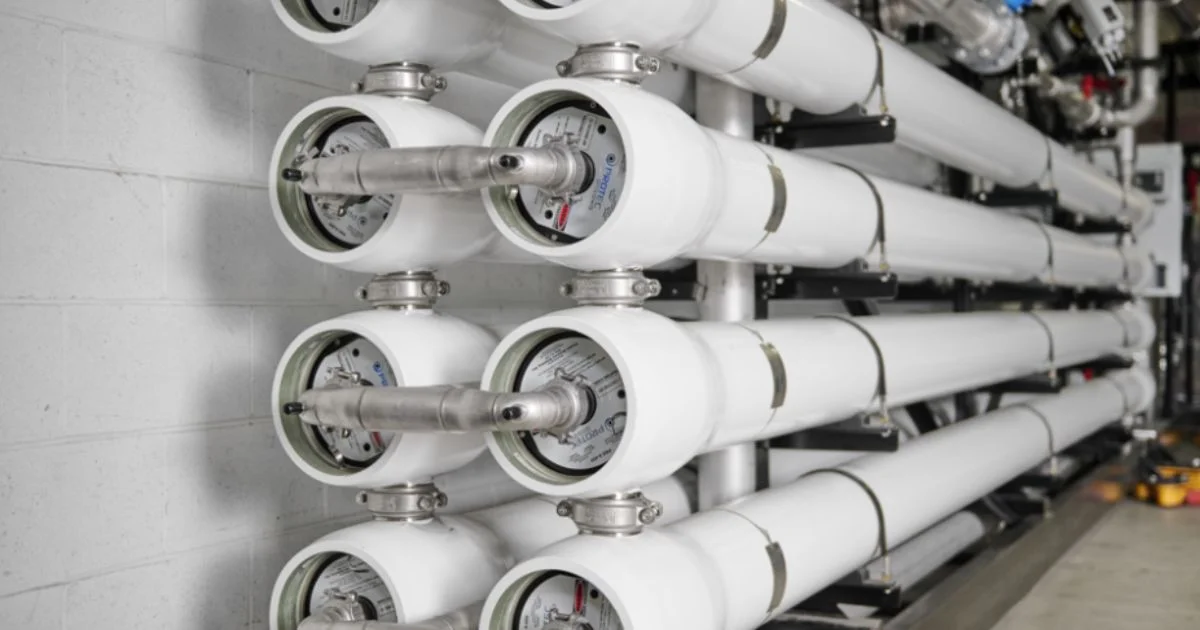
Reverse osmosis is a core technology used in many of Laminar Water's containerized water treatment solutions. Learn how it works and where we recommend deploying mobile RO technology.
Note: This post is a general introduction written by our marketing team and reviewed for technical accuracy by our engineers. For in-depth analysis of a specific technology or application, please contact our engineering team.
Mechanical water filtration methods, like media or membrane filtration, are excellent at removing suspended particles: dirt, pathogens, and other solids that can be physically strained out. But some of the most challenging contaminants aren't suspended. Rather, they're dissolved.
Substances like salts, minerals, fluoride, nitrate or "forever chemicals" (PFAS) exist as individual ions and molecules, fully integrated with the water. Because they have formed a true solution, they cannot be removed by physical filtration, no matter how fine the screen. This is a problem that requires a different approach.
This is the specific challenge Reverse Osmosis (RO) was engineered to overcome. It is a highly effective membrane filtration technology that operates by separating dissolved solutes from water as it passes through a semipermeable membrane.
Choosing the right tool for the job is at the heart of good engineering. Here, we break down the specific scenarios where RO is the necessary choice to truly treat your water.
What Reverse Osmosis Is (and What It Isn’t)
Osmosis is a process that occurs when a water-permeable membrane separates two areas with different concentrations of solvents (water) and solutes (dissolved contaminants). Water molecules will naturally pass through the membrane to ‘balance out’ solute concentration on both sides.
Reverse Osmosis uses a high-pressure pump to reverse this natural process. This pump propels feed water into pressure vessels, forcing it against a semipermeable membrane. The pressure overcomes the water's natural osmotic pressure, squeezing the small water molecules through the membrane while leaving the larger molecules of dissolved contaminants behind.
This process, which operates continuously, produces two distinct streams:
Permeate: The purified water that has passed through the membrane.
Concentrate: The stream of water containing the rejected contaminants that are flushed away.
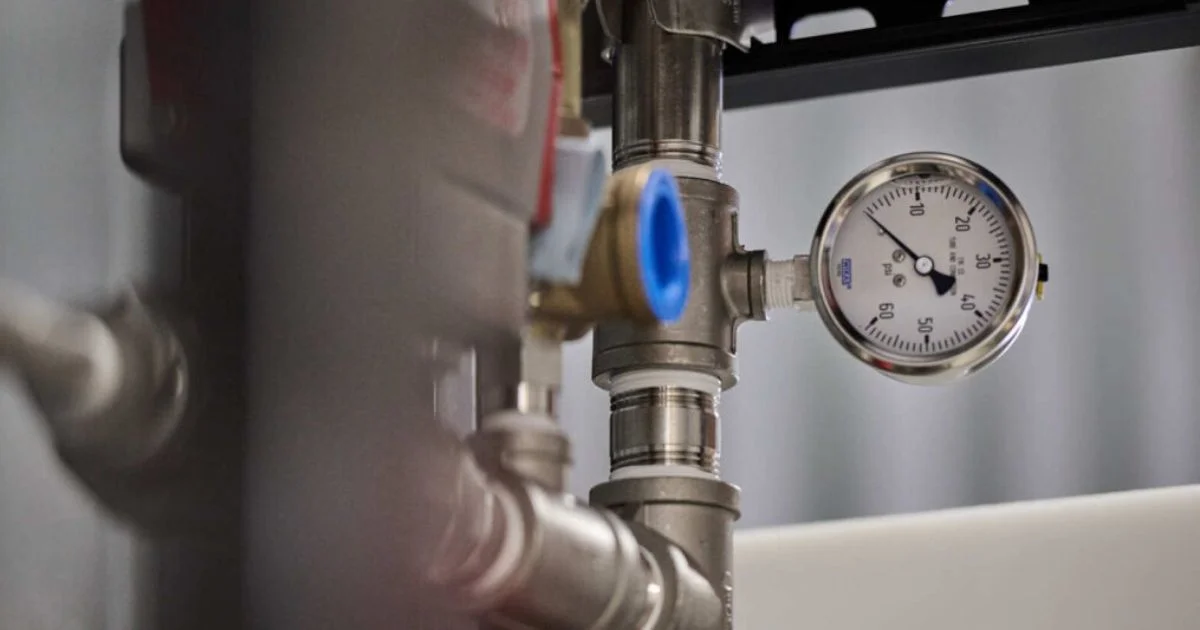
The pressure requirements for this process vary based on the feed water. Treating groundwater and surface water typically requires pressures below 300 psi, while seawater desalination can demand pressures as high as 2,000 psi due to its much higher osmotic pressure.
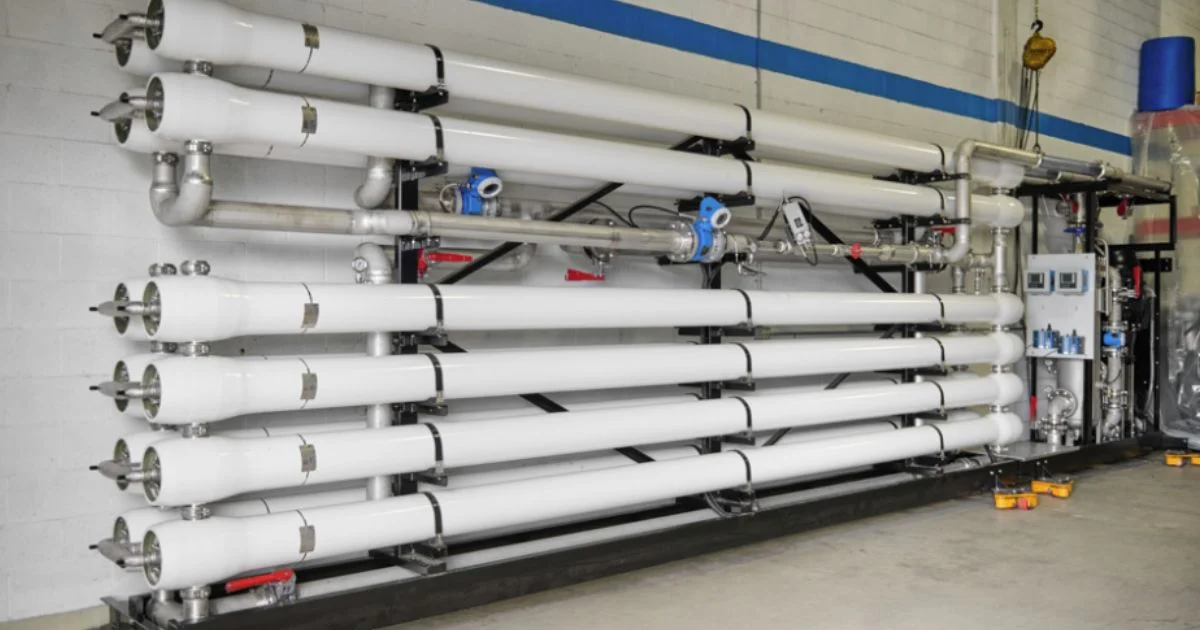
The workhorse of this system is the spiral-wound membrane. These membranes typically measure around 40 inches in length and 8 inches in diameter and are housed within the pressure vessels, with each vessel usually containing 5-7 membrane elements.
System Design for Peak Performance and Longevity
A successful RO system depends on a design that maximizes efficiency and protects the sensitive membranes from damage.
Volumetric Recovery & Cross-Flow Velocity
Volumetric Recovery refers to the percentage of feed water that is captured as permeate. In most RO systems, this recovery rate is between 50% and 90%. For drinking water, recovery rates usually fall between 65% and 85%, while seawater desalination is closer to 50%.
To achieve these rates and prevent the membrane from fouling (clogging), it is essential to sustain cross-flow velocity on the feed side of the membrane. The turbulence created by this cross-flow is a key factor in the proper, continuous operation of an RO system.
Staging and Arrays for Efficiency
Staging is a key strategy for enhancing system efficiency. In a typical two-stage setup, the first stage treats a portion of the feed water, and the second stage processes the concentrate from the first. This configuration can achieve an overall recovery rate of around 75%.
To optimize flow dynamics, the pressure vessels are arranged in arrays. In a two-stage system, the second stage usually contains half as many vessels as the first. This design choice maintains the necessary turbulence to promote effective filtration.
The Critical Role of Pre-Treatment
RO membranes are precision instruments; they are not designed to handle debris. They can be easily damaged by contaminants like particulate matter, bacteria, and large organic molecules. Effective pre-treatment is therefore one of the most critical aspects of RO system design. Technologies like Ultrafiltration are used to remove these substances, preventing early fouling and extending the lifespan of the membranes.
Membrane Cleaning and Maintenance
To maintain performance, regular cleaning is essential to remove accumulated contaminants and restore efficiency. Cleaning protocols often employ citric acid and detergent-type chemicals in a multi-stage process:
Low pH solutions are used to target scale and metal oxides.
High pH solutions are used to address organic and biological fouling. This dual approach ensures comprehensive cleaning and prolongs membrane life.
5 Scenarios Where Reverse Osmosis Is Needed for Water Treatment
Reverse Osmosis is a powerful technology, but not always a necessary one. It’s a high-pressure process that requires a lot of energy. With that said, we do recommend incorporating RO as part of your water treatment train in the following scenarios:
Removing Minerals and Total Dissolved Solids (TDS) from Groundwater
Removing "Forever Chemicals" (PFAS) from Groundwater
Removing Naturally Occurring Fluoride from Groundwater
Reusing Industrial Wastewater
Purifying Surface Water
1. Removing Minerals and Total Dissolved Solids (TDS) from Groundwater
For municipalities and companies using groundwater high in mineral content, RO is a cornerstone technology for producing clean water.
Total Dissolved Solids (TDS) is a measure of all the dissolved minerals and salts, like iron, magnesium, and sodium, that are invisible in the water.
Although it occurs naturally, elevated levels of TDS cause problems. High levels of TDS can give water an unpleasant taste, often described as salty, bitter, or metallic.
The Guidelines for Canadian Drinking Water Quality set an Aesthetic Objective (e.g. for taste or odour) for TDS at or below 500 milligrams per litre (mg/L).
Beyond taste, High TDS also causes operational concerns. As water is used, the dissolved minerals form hard scale deposits that can clog pipes, boilers, and other equipment, which can cause this infrastructure to fail prematurely.
Reverse Osmosis removes up to 99.9% of TDS from your water by physically separating the water molecules from the dissolved solids. It’s a straightforward solution to a persistent problem.
2. Removing "Forever Chemicals" (PFAS) from Groundwater
Reverse Osmosis is up to 99% effective at removing certain PFAS from your drinking water.
Per- and polyfluoroalkyl substances (PFAS) are human-made chemicals known as "forever chemicals." They earned the nickname because their strong chemical bonds mean they persist in water, soil, and even living organisms for decades or longer without breaking down.
Exposure to PFAS has been linked to several health risks, including various cancers, negative reproductive effects, and problems with the immune system.
In 2024, Health Canada responded to these concerns by drastically lowering the maximum acceptable level of PFAS in drinking water to just 30 nanograms per litre (ng/L). This is a strict regulation that requires a high-performance treatment solution.
Research shows that Reverse Osmosis effectively removes up to 99% of several specific PFAS, including the two most common and widely studied compounds, PFOA and PFOS. For a contaminant this serious, RO offers reliable peace of mind.
3. Removing Naturally Occurring Fluoride from Groundwater
Reverse Osmosis is one of the few technologies that can block fluoride ions, separating them from the clean water with a removal rate of 85-92%.
Fluoride is often added to drinking water at low, controlled levels to prevent tooth decay. However, it can also occur naturally in groundwater at high concentrations. When these levels are excessive, fluoride becomes a health risk that requires specialized treatment.
Health Canada sets the maximum acceptable concentration (MAC) for fluoride in drinking water at 1.5 milligrams per litre (mg/L).
Because fluoride exists in water as a dissolved ion, it can't be caught by conventional mechanical water filters. It will flow right through any filter designed for physical particles.
Since fluoride ions are larger than water molecules, Reverse Osmosis effectively separates them and reduces the concentration of fluoride in your drinking water. That’s why a treatment train including Reverse Osmosis is the industry standard for successful fluoride removal.
4. Reusing Industrial Wastewater
Reverse Osmosis makes advanced wastewater reuse possible, serving as the final stage in the treatment process.
Facing stricter regulations and rising costs, many companies are looking for ways to reduce their environmental impact. Minimizing their use of fresh water is a major part of this.
One of the most effective ways to reduce a company’s water use is to treat and reuse wastewater on-site. This could involve recycling cooling tower or boiler water back into the water system or treating process water so it can be reused in other stages of production.
After other filters have removed the larger contaminants, RO effectively removes the remaining dissolved salts and chemicals to turn a wastewater into a valuable resource.
5. Purifying Surface Water
While Ultrafiltration (UF) is great for removing pathogens and suspended solid, following it with Reverse Osmosis produces an even purer water.
Standard municipal water treatment is usually fine for homes, but it may not be pure enough for certain applications. Some require what is known as highly purified or ultrapure water, which has been treated to remove nearly all impurities.
The combination of Ultrafiltration and Reverse Osmosis is ideal when the goal is to create highly purified water from surface water for certain municipal or industrial purposes. It is used for advanced water reuse programs, where treated water is brought to a potable standard, or to supply exceptionally pure water for plants that make semiconductors, cosmetics, chemical products, or pharmaceuticals. Medical and clinical laboratories also use ultrapure water for purposes like reagents and calibrating test instruments.
For these applications, an on-site containerized water treatment plant that includes an UF-RO treatment train is a cost-effective way to produce a reliable purified water supply.
A Note on a Related Technology: Nanofiltration (NF)
Nanofiltration (NF) shares similarities with RO in terms of setup, in that it uses the same pressure vessels and system configurations, but differs in its performance and target contaminants. NF membranes are designed to remove larger, divalent and trivalent ions like calcium and phosphate. This makes it particularly suitable for applications like hardness removal and the elimination of disinfection byproduct precursors (organic molecules that can create harmful substances when combined with chlorine).
Why Reverse Osmosis Works Best as a Team Player
Like any specialist, Reverse Osmosis does its best work when it’s part of a team.
Reverse Osmosis is a precision technology with one very specific purpose: separating water from contaminants at a molecular level. It is not, however, built to handle larger suspended particles.
Sending dirt, microbes, and other larger contaminants directly to your RO system will “foul” the membrane and make it less effective over time.
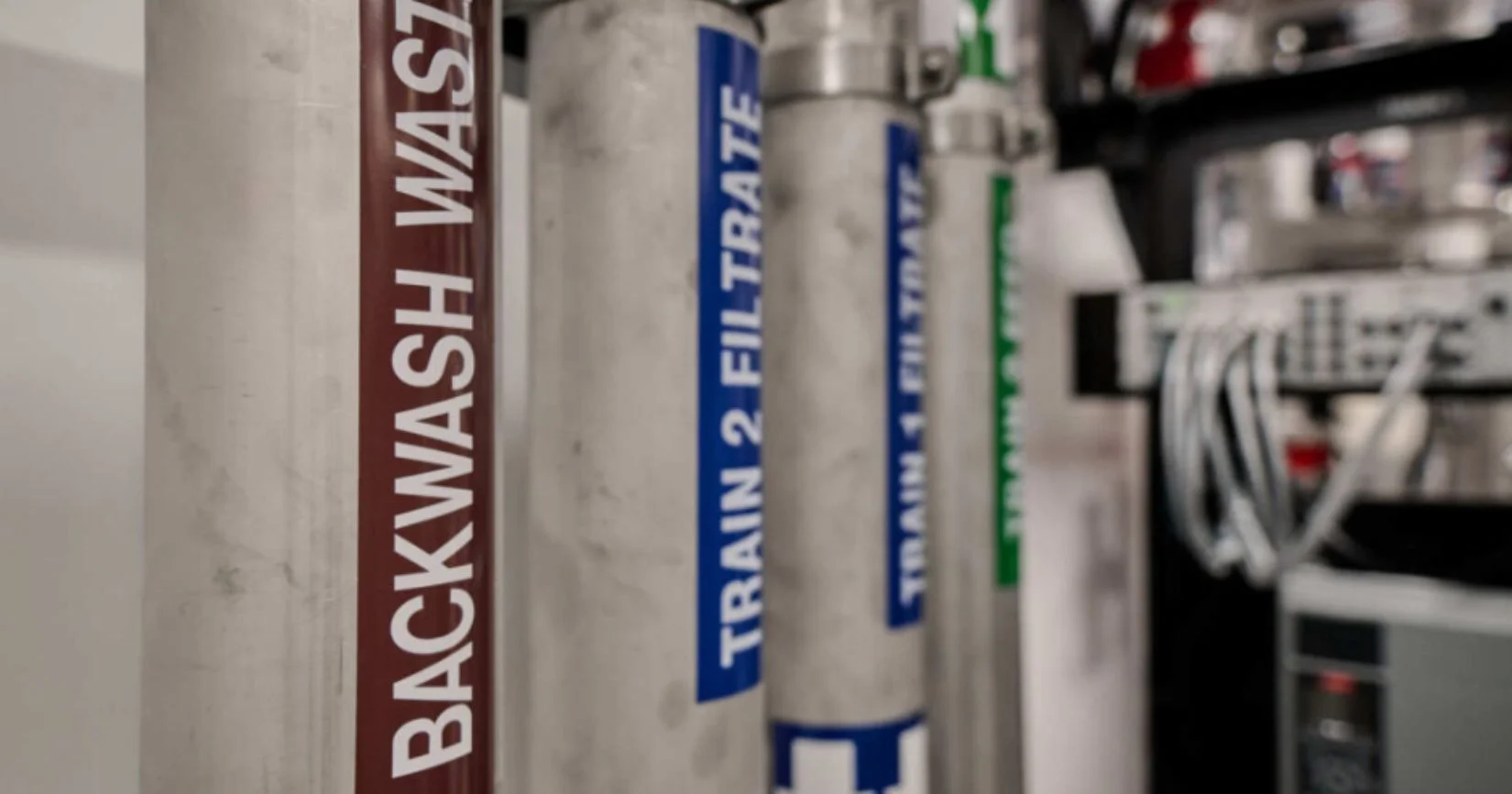
Because of this, Reverse Osmosis is always most effective as a part of a multi-stage sequence of water treatments called a "treatment train."
Technologies like media filtration (Greensand filtration, activated carbon, etc.) or membrane filtration (Microfiltration or Ultrafiltration) are placed first in the train to handle the "rough work” of removing the suspended solids, chemicals, and scale-forming minerals. Then, RO finishes it off by removing dissolved salts and minerals right down to the molecular level.
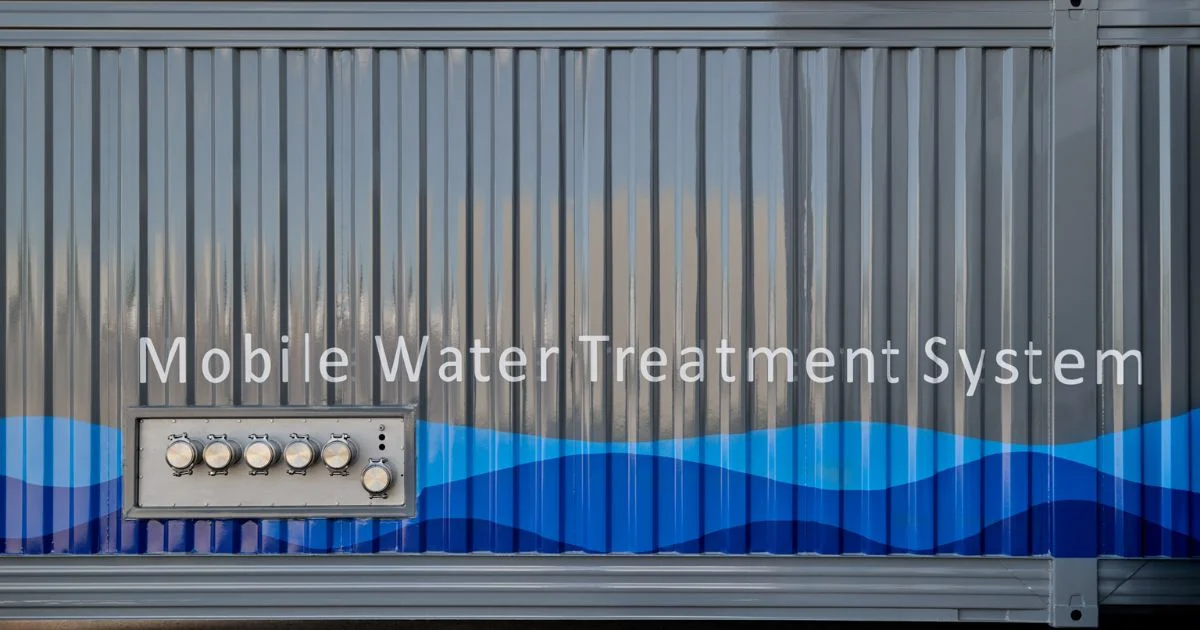
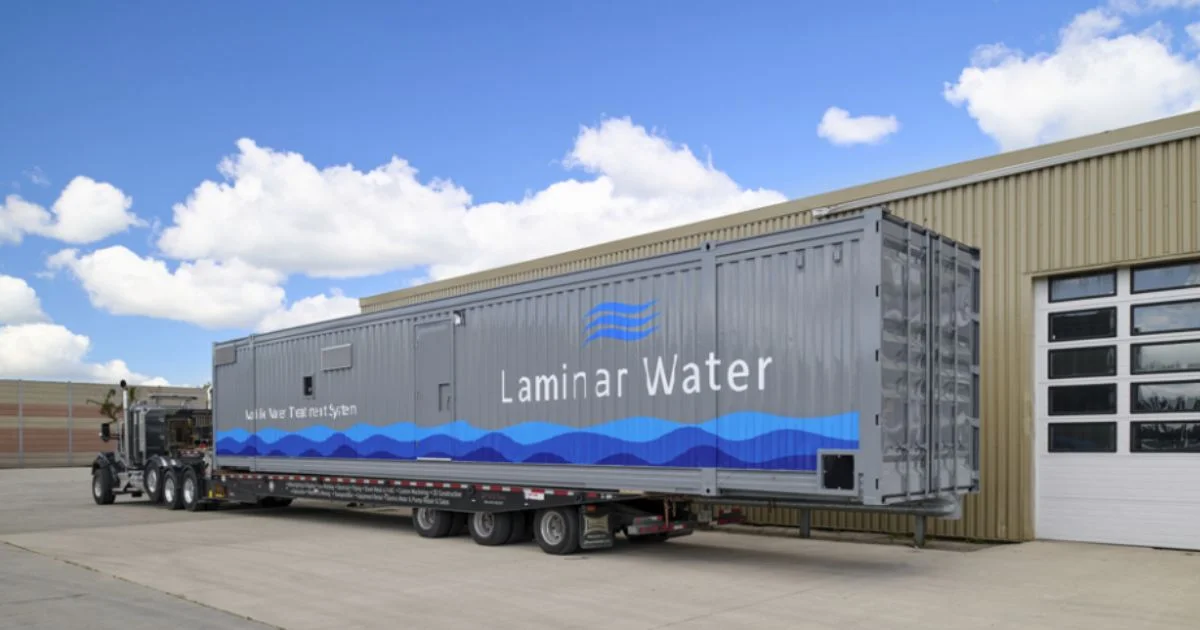
Laminar Water specializes in this integrated approach. Each of our containerized water treatment plants is a complete, self-contained treatment train. And every system is custom engineered with the right combination of water filtration technologies to tackle one or more specific water challenges.
This modular design also makes it possible to deploy a complete, multi-stage treatment plant in a fraction of the time it takes to build a traditional facility. It is a rapid and reliable water treatment solution for municipalities, industrial sites, remote communities, and anywhere you need clean, safe water fast.
Is Reverse Osmosis Right for You?
Deciding on a water treatment system comes down to matching the right technology to your specific problem. To see if your situation calls for Reverse Osmosis, consider these three questions:
Is the problem a dissolved substance (like salts, nitrate, fluoride, or PFAS) that can't be physically filtered out?
Do you need to meet a strict purity standard for one or more specific contaminants?
Are you designing an industrial wastewater reuse program?
A "yes" to any one or more of these questions strongly suggests that Reverse Osmosis is the right tool for the job.
Laminar Water builds complete, containerized treatment systems to solve these kinds of complex water challenges. If you're not sure which technology is the right fit, get in touch. We’ll assess the challenge to help you find the best path forward.