How to Prepare Your Site for a Containerized Water Treatment Unit

Preparing a site for a Laminar Water system is relatively simple and straightforward. Learn how to prepare your site for your containerized water treatment plant.
Note: This post is a general introduction written by our marketing team and reviewed for technical accuracy by our engineers. For in-depth analysis of a specific technology or application, please contact our engineering team.
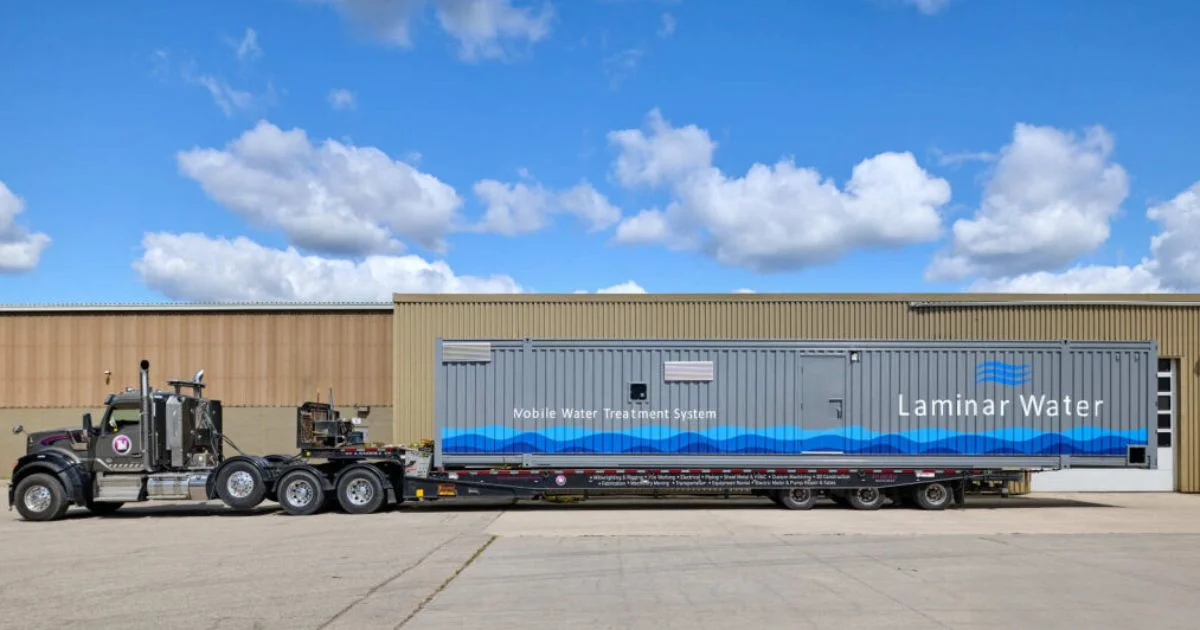
Containerized water treatment systems are pre-engineered, factory-tested water treatment plants built inside standard shipping containers. They represent the fastest and most cost-effective way to deploy advanced water treatment technology to almost any location.
Preparing a site for a containerized water treatment system takes a fraction of the time and effort as a traditional, site-built plant. In fact, in most cases, the site work is no more complicated than preparing to place a large, prefab garage.
While the unit itself is a standard 53ft intermodal shipping container, every site has its own unique characteristics. This post outlines the basic steps involved in preparing your site.
Laying the Foundation
Your containerized water treatment system just needs a structurally solid and level surface. The great news is that this doesn't automatically mean pouring concrete, which can be difficult and expensive in remote locations. A compacted crushed gravel pad is often more than sufficient to keep the heavy unit stable. However, a concrete slab is the ideal foundation if possible at your site.
The first step is understanding the ground it will sit on. For any heavy equipment, it's important to know what's underneath. This can involve a geotechnical investigation to analyze the soil, but often, a simpler site assessment is all that's needed, especially if the ground is already known to be stable. Our team can help you determine the most practical approach for your location. The goal is just to confirm a few key factors:
Soil bearing capacity, or the soil's ability to support the heavy, concentrated load of the treatment unit and its concrete foundation without shifting or settling over time.
Soil composition, meaning the types of soil present (such as clay, silt, sand, or gravel) and their properties. Different soils behave differently under load, especially when wet, which influences the design of the slab.
Depth of groundwater table. A high groundwater table can complicate excavation and may require specific measures to maintain the foundation's long-term stability.
Regional frost depth, which a structural engineer needs to know in order to prevent "frost heave." The slab must be designed to account for this, typically by placing its footings below the maximum frost line.
For a standard 53-foot plant, the final foundation design (whether it's a gravel pad or a concrete slab) will be based on these factors and the total operational weight of the unit. Our engineers provide all the necessary specifications to make this step straightforward.
Location & Grading
With the foundation plan settled, the next step is finalizing the system's physical footprint. This is simply a matter of proper placement and ensuring that water drains away effectively.
The unit should be positioned as close as possible to the raw water source to minimize the length of intake piping and reduce the energy required for pumping.
The layout requires sufficient clearance on all sides of the container to allow personnel safe access for routine maintenance and to ensure adequate airflow for ventilation systems.
The site will also need to be graded to direct rain and meltwater away from the foundation. In cold climates, effective subgrade drainage should also be installed to help reduce the risk of frost heave.
Access Roads
Using a standard 53-foot shipping container simplifies the logistics of delivery. The unit is classified as standard cargo, not an oversized load, which can reduce the need for special permits and lower transportation costs by road, rail, or sea.
You'll just need to plan for how the container will physically reach its final location, ensuring the delivery truck and placement crane can access the prepared pad. In many cases, existing site roads are perfectly adequate.
Utility Connections
Once the civil work is complete and the pad is ready, the next phase is connecting the system. This is where the 'plug-and-play' advantage of a factory-built unit becomes clear. Instead of a complex, site-built web of pipes and wires, you're just making a few final connections.
Electrical Power
The container arrives as a fully pre-wired unit with all internal systems tested and ready to go. It just needs to be connected to your local power source.
A Laminar Water system requires a dedicated, grounded, three-phase power source (60 Hz in North America). The final step is having a licensed electrician run power from the disconnect or transformer to the main electrical panel in the container. This ensures the connection is safe, reliable, and code compliant.
Plumbing
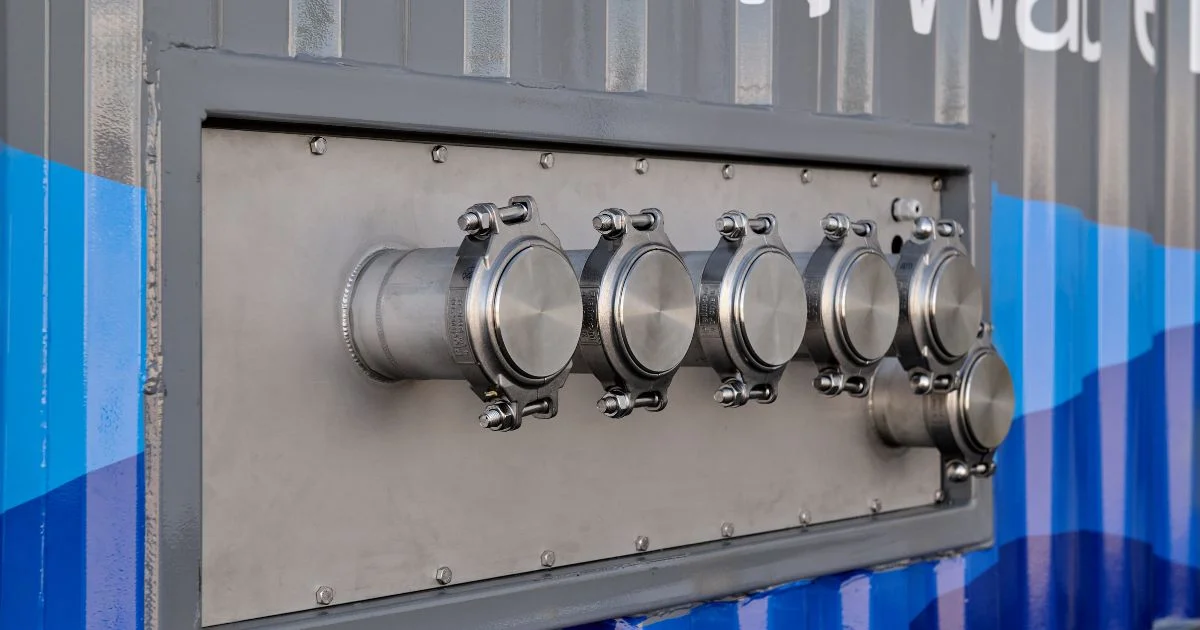
While the container is a pre-plumbed unit, it requires several external connections to the site's piping network:
Intake piping to bring raw water from its source to the container's inlet connection.
Discharge piping to carry the purified water to its point of use, such as a storage tank or distribution main.
Ancillary piping for the container's internal floor drains.
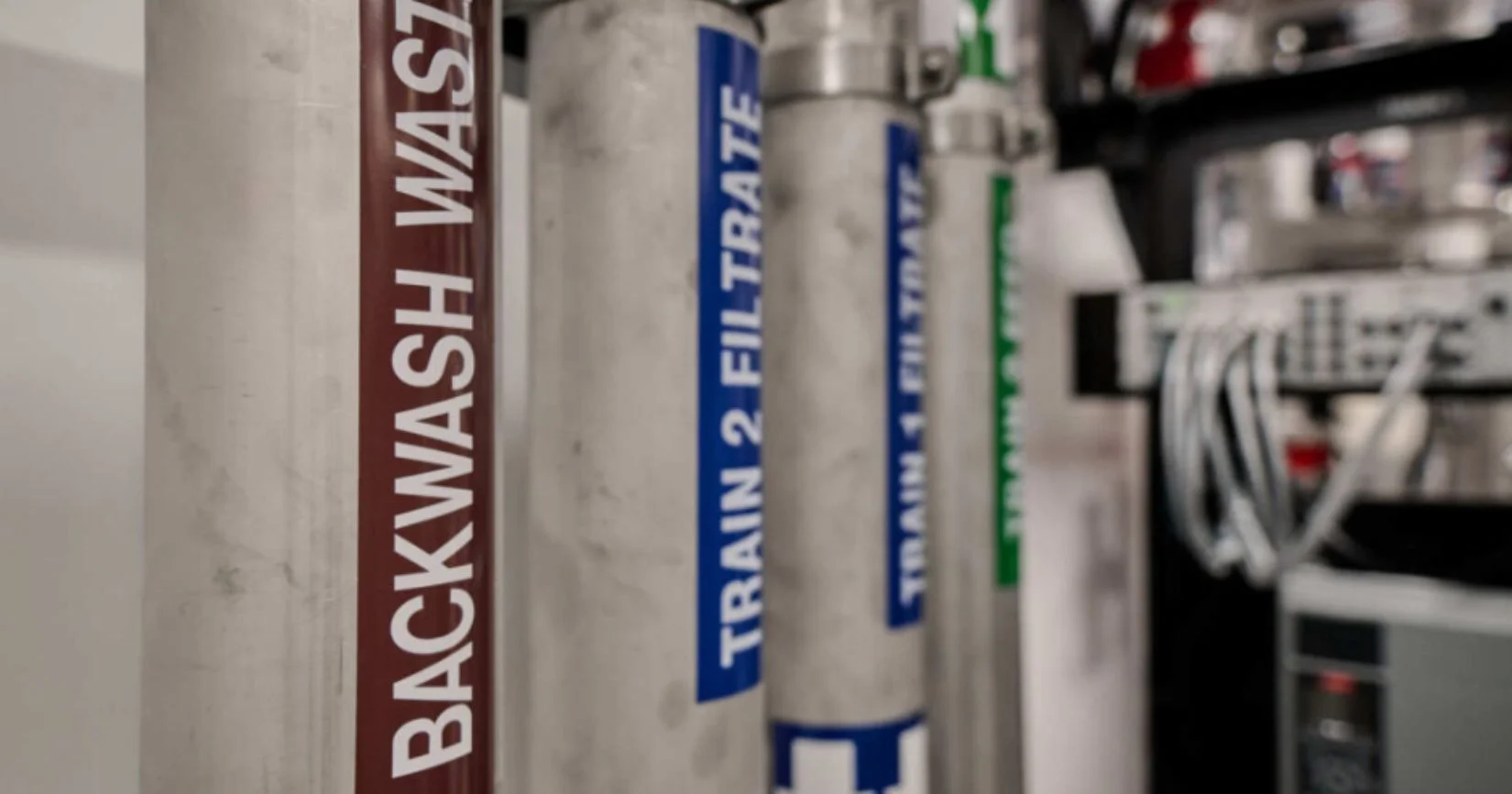
Wastewater discharge. Treatment processes like Reverse Osmosis (RO) and Nanofiltration (NF) produce a concentrated reject stream called brine. Systems like media filtration and ultrafiltration require periodic backwashing that generates wastewater. These streams must be handled in compliance with environmental regulations. A dedicated, buried wastewater line is commonly used to accommodate system waste streams.
For any installation in a climate with freezing temperatures, a combination of heat tracing and insulation is commonly installed to prevent pipe damage and allow for year-round operation. These should be applied to all exposed intake, discharge, and wastewater pipes, as well as any external valves and fittings.
This external protection works in tandem with the container's own climate-resilience features. Laminar Water units are fully insulated and equipped with redundant HVAC systems to maintain stable internal temperatures and protect the technology inside through any season.
Site Safety and Security
A containerized water treatment unit is a valuable asset. Fortunately, Laminar Water systems are housed in shipping containers made of high-strength Corten weathering steel with a robust, lockable structure.
To support this, simple additions like sturdy perimeter fencing and site lighting are effective. We can also include remote monitoring systems with door sensors and security cameras as part of the package, giving you peace of mind without any hassle.
The plan must also cover the safety of everyone working on or near the site. Clear safety protocols, proper signage, and a safe, unobstructed work area around the unit are all important parts of the site layout.
Navigating Permits and Approvals
Getting the right permits and approvals can often take longer than building the system itself. It’s best to start the permitting process as early as possible to ensure that, by the time the unit is delivered, the site is legally ready for installation and operation. This approach prevents the frustrating scenario of a completed plant sitting idle while waiting for paperwork to be processed. In addition to building and environmental permits, separate approvals are often required for connecting to local utilities.
Good Preparation Makes for a Fast Deployment
Getting the site prep right is what makes a rapid deployment possible. This upfront work is how you get the main advantage of a containerized system: the ability to get clean water flowing much faster than with traditional construction.
For help assessing your site's specific requirements and your water treatment needs, contact the team at Laminar Water for a free, no-obligation problem assessment.