Securing Your Containerized Water Treatment Plant

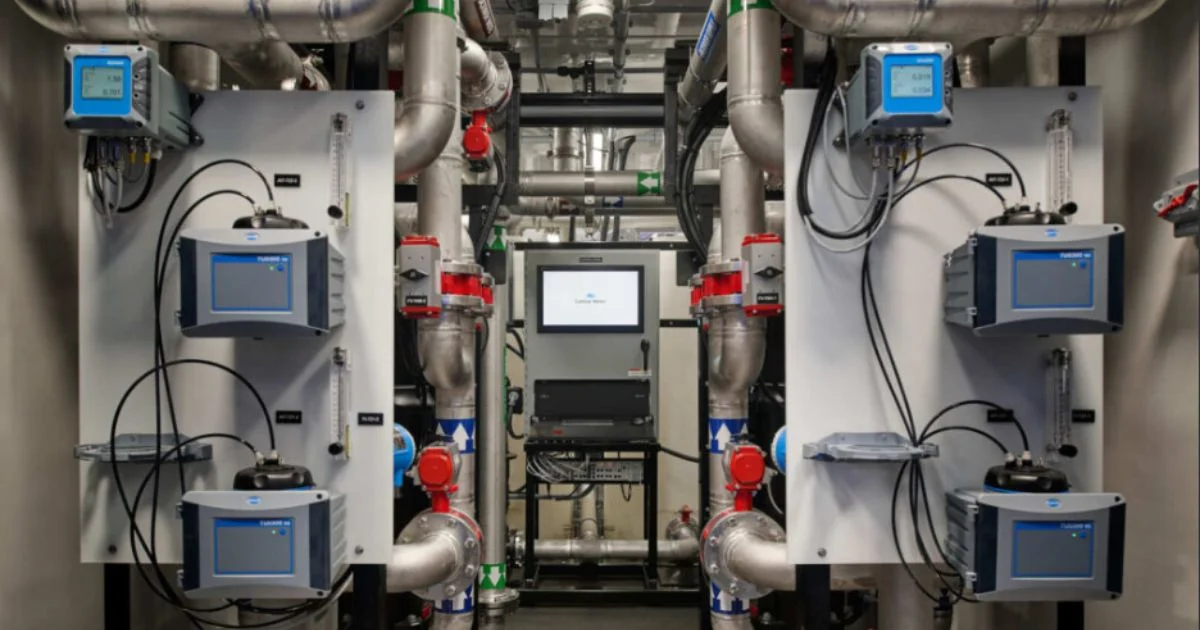
Securing your containerized water treatment plant is far simpler and more cost-effective than securing a traditional facility. Learn how a straightforward, layered approach protects your unit from physical and cyber threats.
Note: This post is a general introduction written by our marketing team and reviewed for technical accuracy by our engineers. For in-depth analysis of a specific technology or application, please contact our engineering team.
Water treatment plants are important pillars of your community’s infrastructure, making their security a priority. But Laminar Water’s treatment systems aren’t sprawling, permanent facilities; they’re compact, mobile, containerized units. This shift changes the security conversation.
When you search for information on securing a water treatment plant, most of what you’ll find focuses on traditional, brick-and-mortar facilities. These are often multi-acre sites that cost tens of millions of dollars, employ dozens of staff, and have often been operating for decades. Both the security measures they use and the risks they face are on a completely different scale than those of a compact, containerized system.
Securing a containerized unit doesn't mean reinventing the wheel. While the specific risk profile varies by installation location, the real-world physical and cyber risks are far more manageable than those of a large-scale plant. Here, we’ll outline a layered approach that balances practical site preparation with modern, built-in system security.
What are the Risks to a Containerized Water Treatment System?
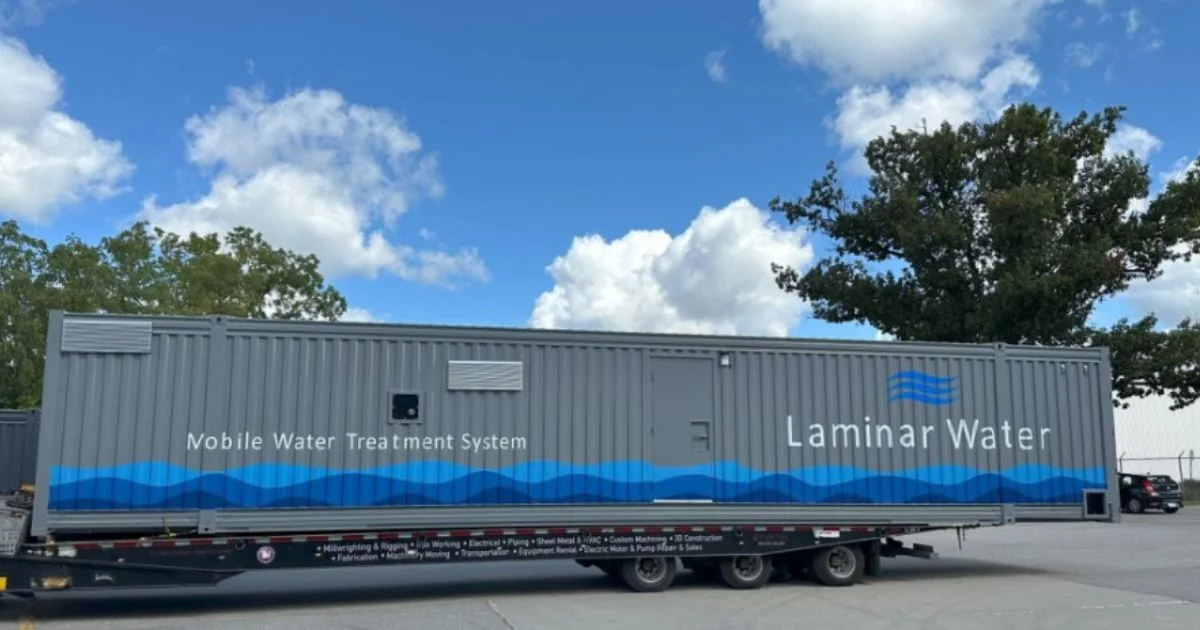
The first step in this practical approach is to understand the context of your specific site. The risk profile varies by location; a remote industrial site faces different concerns than a municipal backup, for example. From there, we can break down the threats into the two main categories: physical threats and cybersecurity threats.
Physical Threats
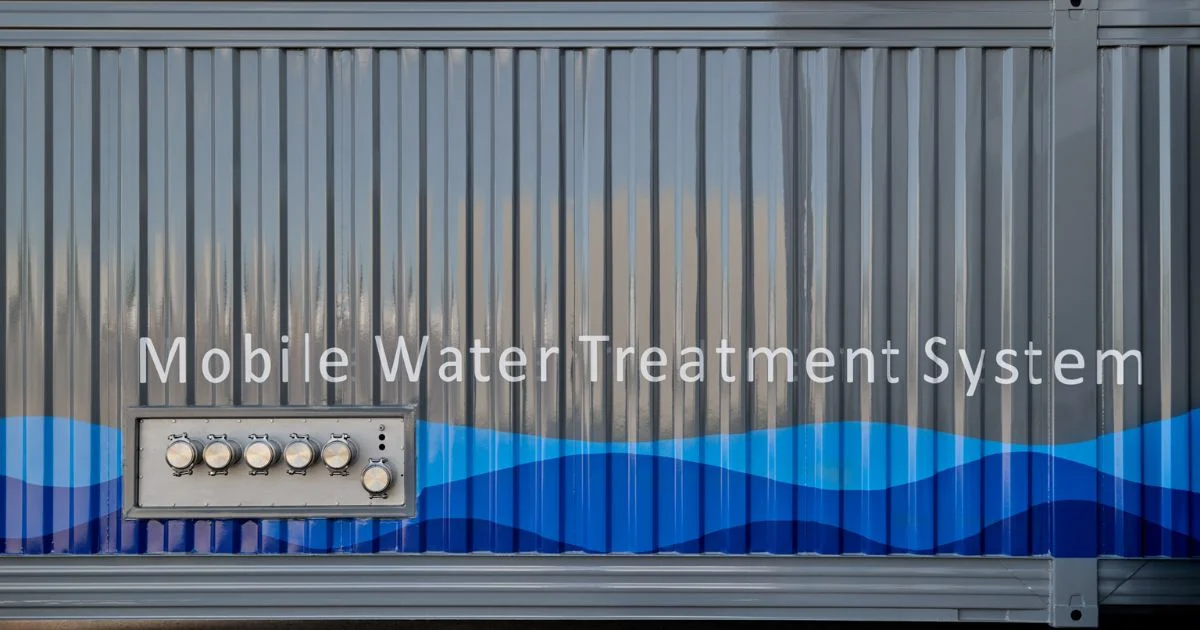
When people think of physical threats, they often picture someone trying to break into the container for the purpose of either theft or vandalism. The reality is that a shipping container made of high-strength Corten steel is an incredibly tough target. The primary weak point is always the door, which is a single and manageable point to secure.
With that said, it’s worth remembering that an attacker doesn't need to get inside to cause problems. The few exposed external parts, like piping or HVAC units, can be a target for vandals.
However, it's important to put these risks in perspective. Although we often hear about theft and vandalism that targets remote infrastructure, the bulk of this is a result of attempted metal theft (especially copper) aimed at telecom and electrical sites.
The risks to a water treatment system are small by comparison. A containerized unit isn't full of equipment that's easy to sell. Additionally, an opportunistic thief can't see inside and is unlikely to see it as an easy target.
The reality is that these minimal risks can be entirely eliminated with a few straightforward, one-time site preparations.
Cybersecurity Threats
Physical security is one half of the story; digital security is the other. As the Canadian Centre for Cyber Security (CCCS) notes, the computer systems used to run water treatment infrastructure can be targets for cyberattacks. The main threats identified by security experts include ransomware (which denies access to systems until a payment is made), insider threats (both accidental and intentional), and denial-of-service incidents that can interrupt operations.
Recent history has shown that the risk is greater when human error and/or outdated legacy software leave these control systems vulnerable to attack. In the well-documented Oldsmar, Florida incident, for example, a cyber-attacker exploited poor password security, an outdated operating system, and insecure remote access software to gain control.
As is the case with physical security, it is important to keep these cyber risks in perspective. A massive, multi-million-dollar municipal water treatment plant represents a high-impact target for a cyberattack; but a single, containerized system is far less likely to be a primary target. Its smaller scale and self-contained nature also allow for much faster recovery and restoration of service if an incident ever occurs.
With that said, implementing basic cybersecurity best practices is a part of protecting any piece of critical infrastructure, no matter the scale. Fortunately, the self-contained, new-build control system of a containerized water treatment plant is far easier to secure than a sprawling, older network with a patchwork of legacy equipment.
Securing Your Containerized Water Treatment Plant
Now that we've put the physical and digital risks into perspective, we can focus on the solution. A practical security plan isn't about one complex, expensive fix. It's about building simple, effective layers of protection based on a clear understanding of your site's specific needs.
This layered approach also helps operators meet emerging regulatory expectations for cybersecurity, like those found in Ontario's Drinking Water Quality Management Standard (DWQMS).
Layer 1: Securing the Site
The first layer is securing the physical site, which is far simpler for a compact, containerized system than for a conventional, multi-acre plant.
Securing the perimeter of a 53-foot container and its foundation is a low-cost measure. You can create a secure compound with a basic chain-link fence and gate. This is a core part of restricting access as recommended by the Ontario’s Drinking Water System Best Management Practices.
This foundational security also includes ensuring good visibility and hardening. Place the unit in a high-visibility location, use signage to identify the restricted area, and install motion-activated LED lighting around the container and its access points to eliminate shadows.
From there, protect the few vulnerable external components. Consider installing steel cages around external HVAC components or running external cabling and piping through armored conduits or burying them. These are simple, one-time fixes.
Layer 2: Hardening the Asset Itself
The next layer is the unit itself. The primary defense is the inherent toughness of the steel shipping container. With the walls and roof being a formidable barrier, you can narrow your focus to the weakest link: the door. Reinforcing it with a high-quality lock is a simple and effective upgrade.
Beyond that, modern systems Laminar Water units are equipped with several built-in features that serve double duty for security and operations:
Door Sensors: These provide immediate alerts for any unauthorized access, and they also assist with climate control by notifying you if a door is left open in freezing conditions.
Internal Surveillance: Our units include five internal video cameras. While they act as a deterrent, operators also use them daily to remotely check for leaks or issues in the chemical area.
You can, of course, add more, but the core components are already there.
Layer 3: Controlling and Monitoring Access
The next layer is monitoring who gets in and what they can do. Using electronic access systems, such as key cards, is a simple and effective first step.
This also extends to the system's digital controls. Laminar Water's control systems feature different authority login levels, which enable a supervisor to make changes to alarm callouts while an operator's access is focused on essential daily duties. This "principle of least privilege" is a standard security best practice that's built right into the system.
Layer 4: Improving Cybersecurity
Defending the system's digital controls doesn't have to be complex. The core principles are often simpler to implement in a purpose-built system than in a sprawling, older network. Applying guidance from the CCCS for critical infrastructure, we can focus on a few key actions:
Isolate and Control Access: The most crucial step. Implement firewalls and use Multi-Factor Authentication (MFA) for any remote access. A key principle is network segmentation or creating a strong boundary between the OT network (the controls) and the corporate (IT) network. This is far simpler to achieve in a single, pre-configured unit.
Train and Manage Human Factors: Educate operators on cybersecurity best practices, like identifying phishing emails. This also includes simple administrative policies, such as ensuring a former employee's credentials are revoked immediately to mitigate insider risks.
Develop an Incident Response Plan: Know what to do if you have an issue. This plan should include processes for how you detect, respond to, and recover from an incident. A key part of this is ensuring the system can be operated safely in manual mode.
Enhance Your Security Posture: This involves practical steps like implementing offline backups that are tested frequently to ensure you can recover quickly. It also includes adopting a risk-based approach to updates, ensuring you apply critical vendor patches without introducing unnecessary risk.
This move toward formal regulation (as seen in Ontario's DWQMS) requires operators to develop a program to assess cybersecurity, protect computer systems from unauthorized access, and consider these threats in their formal risk assessment. The layered security actions discussed earlier (like network isolation (firewalls), access controls (MFA), and having an incident response plan with manual procedures) are the core components of the security program that the standard calls for.
This is yet another benefit of a modern, containerized water treatment plant. Instead of auditing a complex, aging plant with a patchwork of legacy equipment, you are starting with a new, standardized, and fully documented system.
Putting the Layers Together
Securing a modular water plant isn't a complex burden. It's simply a matter of combining the system's built-in security with your own effective site preparation. The best results come from a layered approach where:
You provide the simple foundational security: good lighting, a basic fence for the compact site, and protection for the few external components.
The system provides built-in security, including a hardened enclosure, intelligent monitoring, integrated access levels, and modern digital defenses.
Together, these layers create a robust defense that is both more effective and more manageable than trying to secure a traditional, large-scale plant.
If you are facing water treatment challenges, our team is here to help. Contact us for a free problem assessment to see how our systems can provide an effective, secure, and reliable solution for your operation.